Tech Infrastructure
Tech Infrastructure Alert: The Fix Shipped 21 October
By Nattapong Sukkasem · Published · Updated .
TL;DR — Cisco patched CVE-2026-76466 on 21 October, a flaw rated CVSS 9.8 that gives root command execution on clustered Cisco Expressway gateways. Exploit code followed, attackers used it to take four devices at a Russian organisation, and CISA added the flaw to its Known Exploited Vulnerabilities catalogue on 20 November with a federal remediation deadline of Monday 23 November. This tech infrastructure report is about a credential that was never scarce and a fix that has been downloadable for thirty-two days.
Nothing in this tech infrastructure story needed a new discovery. The fix existed on 21 October. The weakness class is the oldest one in the catalogue. The only thing that changed in November is that somebody published working code and somebody else ran it against devices whose owners had not yet taken the update.

What Cisco shipped on 21 October
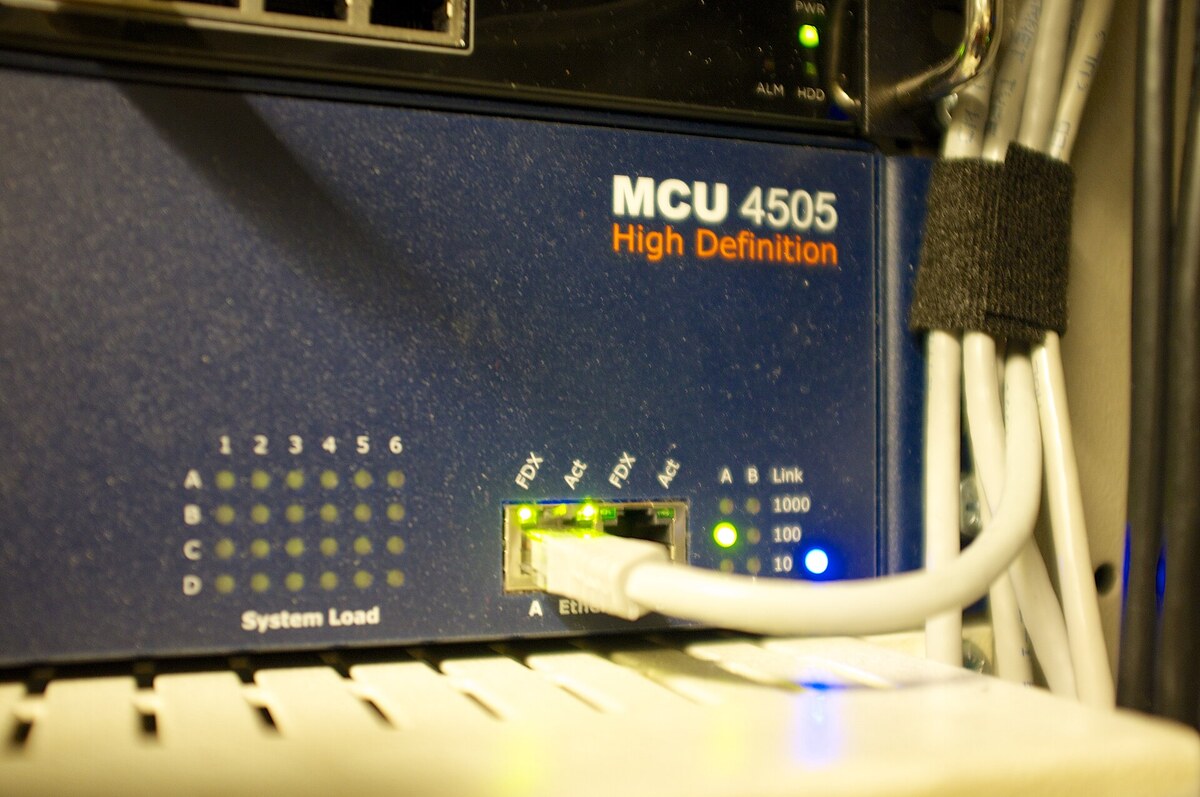
Expressway is a traversal pair. Expressway-C sits inside the network, Expressway-E sits at the edge, and together they carry Mobile and Remote Access sessions so that video endpoints and softphones outside the perimeter can reach the call control inside it. The October advisory wave covered roughly ten Expressway flaws. One of them is the reason anybody is reading about it a month later.
| CVE | CVSS | Weakness | Status and fixed release |
|---|---|---|---|
| CVE-2026-76466 | 9.8 | CWE-798, hard-coded credentials | Exploited in the wild; CISA KEV 20 November; X15.5.20 |
| CVE-2026-76490 | 8.6 | CWE-787, out-of-bounds write | No reported exploitation; X15.5.20 |
| CVE-2026-76494 | 7.8 | CWE-94, code injection | No reported exploitation; X15.5.20 |
| CVE-2026-76495 | 7.8 | CWE-732, incorrect permission assignment | No reported exploitation; X15.5.20 |
| CVE-2026-76491 | 7.5 | CWE-617, reachable assertion | No reported exploitation; X15.5.20 |
| CVE-2026-76492 | 7.5 | CWE-476, null pointer dereference | No reported exploitation; X15.5.20 |
| CVE-2026-76493 | 7.5 | CWE-248, uncaught exception | No reported exploitation; X15.5.20 |
| CVE-2026-76496 | 7.0 | CWE-59, link following | No reported exploitation; X15.5.20 |
| CVE-2026-76435 | 5.3 | MRA provisioning authorisation checks | Separate advisory; fixed in X15.5.3 |
Two details in that table matter more than the scores. The lower-rated entries were found, in Cisco's wording, “during internal security testing using existing testing processes.” The exploited one was not: CVE-2026-76466 was reported by Stefan Aleksic of Jane Street. And the fixed releases differ. X15.5.20 closes the exploited flaw, X15.5.3 closes the Mobile and Remote Access authorisation flaw, and X14 and earlier receive nothing at all — those customers are told to migrate to a fixed release.
The credential was shipped, not stolen
Cisco's own summary says the vulnerability is “due to the use of persistent cookies,” together with insufficient validation of client certificates when TLS Verify Mode is set to Enabled for clustering. The Hacker News reproduced that wording on 20 November; its follow-up the next day described the same CVE as a use of hard-coded credentials. Those two descriptions send a reader in opposite directions. A persistent cookie sounds like something an attacker has to obtain from you first. A hard-coded credential is something that arrived in the product.

cisco-sa-vcs-static-cred-hr7EWZ8t. Static credentials, not stolen ones, and CWE-798 is the class Cisco filed it under.With the cookie in hand, the published chain is short. The attacker connects to the clustering database service, invokes specific remote procedure call commands, and executes arbitrary commands as root on the underlying operating system. The flaw applies only where Expressway is configured in a cluster, and the single piece of network detail anybody has published is a containment measure rather than a vendor fact: F6 advises blocking TCP 4371 and 4372 at the firewall except from trusted cluster node addresses. The only forensic string in circulation is wombat@127.0.0.1 in the Erlang system log.
This is server infrastructure that exists because the firewall says no, and the trust between the two halves of a traversal pair is what makes the crossing possible. A shared secret is the cheapest way to express that trust, and the cheapest way is fine right until the secret stops being scarce.
Four devices, and no attacker to name
The Russian cybersecurity company F6 published the intrusion on Thursday 19 November. The victim is described only as “a Russian organization” — no sector and no name. “The attackers initially compromised two Cisco Expressway internet-facing devices,” F6 said, and “through one of them, they gained access to two additional cluster nodes located on the organization's internal network.” The widely reported figure of four devices is that arithmetic, not a number F6 uses.
After root, the reported sequence is unremarkable and effective: custom Python scripts to scan the network, accessible SMB shares, interaction with SQL Server and WinRM, and finally GitLab repositories, from which credentials and other sensitive data were taken. The scripts were staged under a path pattern of /mnt/harddisk/ followed by a short generated directory name, and two addresses are published as indicators, 66.179.31[.]32 and 18.130.47[.]116. F6 adds one observation about the tooling: “The source code contained characteristic comments and descriptions of fixes indicating the use of an AI assistant.” The intrusion has not been attributed to any known threat actor or group.
A DDoS attack is the one incident whose detection requires no sophistication, because the symptom is the attack. This is the other end of that scale. A handful of remote procedure calls to a clustering port produces no symptom at all, and the first artefact anyone found was a Python script sitting in a directory nobody browses.
A deadline that falls on Monday
CISA added CVE-2026-76466 to the Known Exploited Vulnerabilities catalogue on 20 November, alongside flaws in Apache Roller, SAP NetWeaver Enterprise Portal and VMware vCenter. Under Binding Operational Directive 26-04, federal civilian agencies must remediate all four by 23 November 2026. For everyone else the date carries no legal weight and considerable practical weight, because this tech infrastructure deadline is the clearest public statement available of how quickly the people with the exploitation telemetry think the flaw needs to be gone.
Count the interval honestly. The patch has been available for thirty-two days as of today, and will have been available for thirty-three when the deadline passes. What nobody has published is the other interval. No source gives a publication date for the proof of concept, and none gives a first-observed date for exploitation; every account says only that the attacks came “shortly after” the code appeared. Any specific number of days between those two events would be invented.
The gap that defines an n-day is not the one between disclosure and patch. It is the one between the patch and the proof of concept. A zero-day vulnerability costs an attacker original research; a published exploit costs them a download, and the defender's window closes on somebody else's schedule.
What to do before the deadline
Start with the release string rather than the inventory. Any Expressway running X15.5.3 or earlier is in scope for the exploited flaw and needs X15.5.20; X15.5.2 and earlier also needs X15.5.3 for the Mobile and Remote Access flaw, so an upgrade planned against one advisory can miss the other. Confirm whether clustering is configured, because that is the precondition. Then search the Erlang system log for wombat@127.0.0.1, look under /mnt/harddisk/ for Python files that nobody deployed, and check whether either published address has reached the box. Both addresses can be resolved to their owning network with the WHOIS lookup tool before you escalate — hosting-provider space tells you one thing about an alert, and your own supplier range tells you another.
Keep Cisco's position and F6's separate when you write the change. Cisco states there are no workarounds that address these vulnerabilities. F6's port block is containment for the hours or days before the window, not a substitute for it, and blending the two produces a change record that reads as finished when it is not. Nobody has published a count of internet-facing Expressway devices, so there is no scan figure to argue about.
Cloud security spending has moved steadily toward identity and workloads, which is reasonable, and it has left the small rack-mounted boxes that terminate remote access off most roadmaps entirely. IT security also runs on a calendar that nobody outside it can see: the patch landed on a Wednesday in October, the exploit on an unrecorded day in November, and the deadline falls on a Monday.
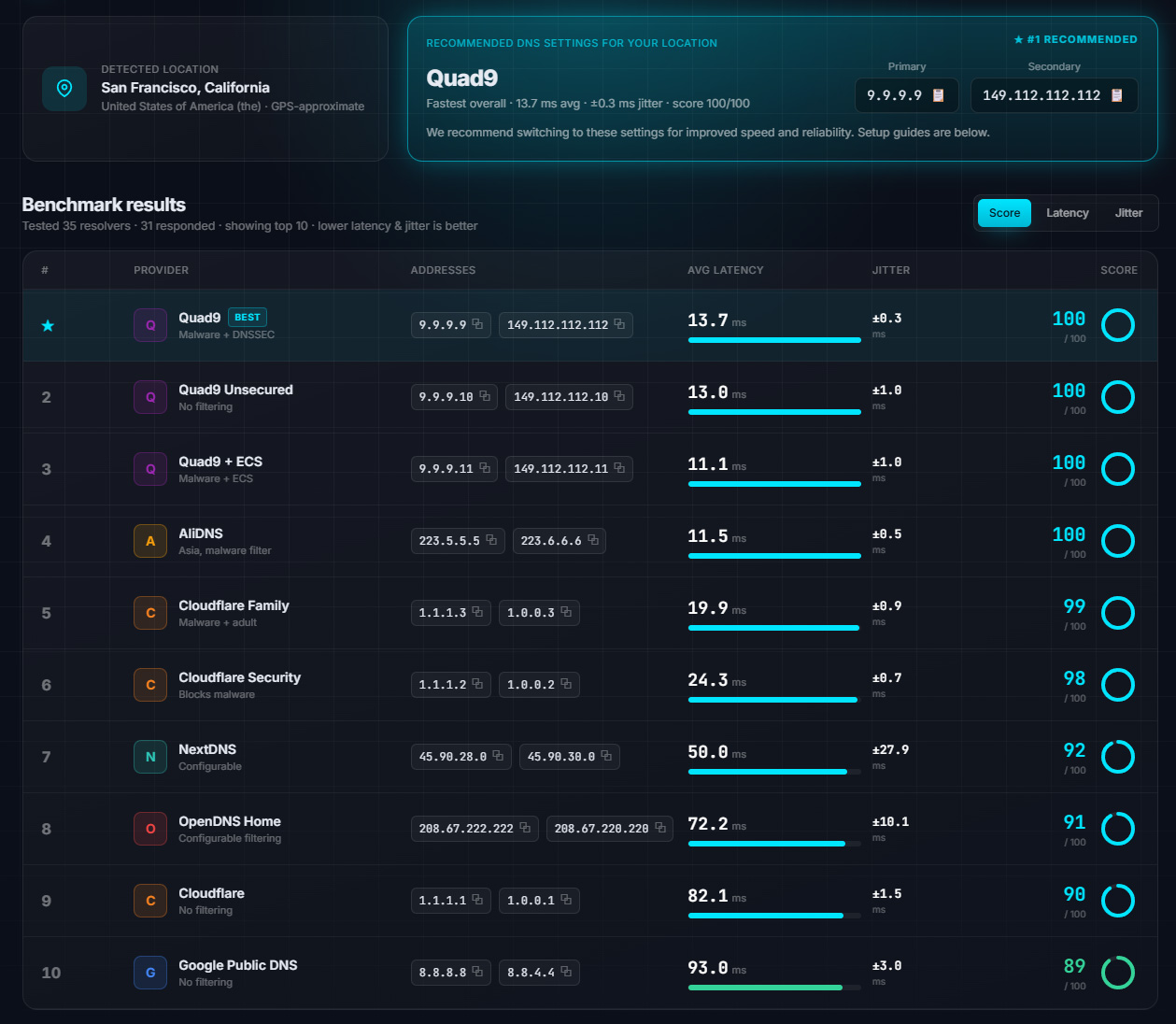
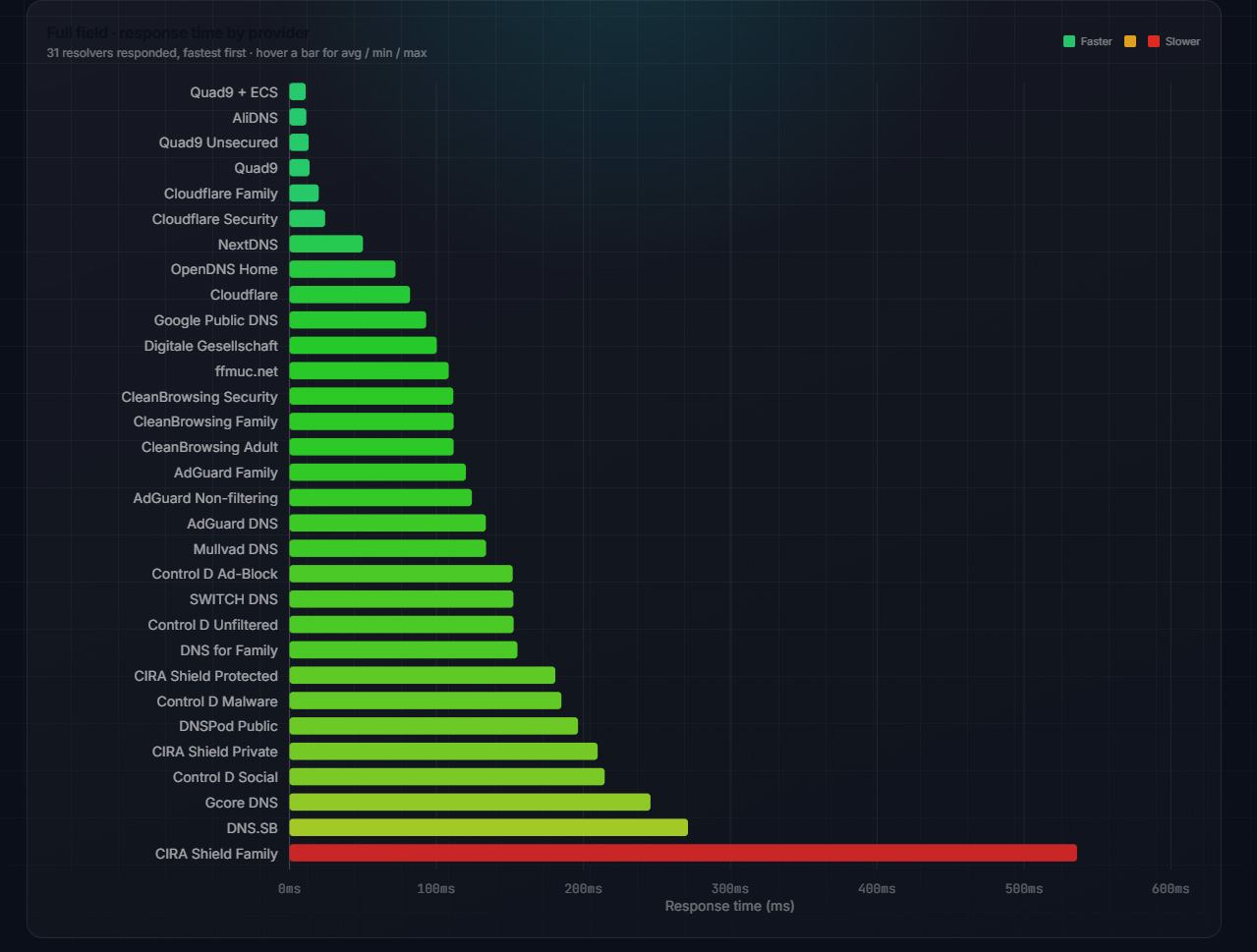
One last thing deserves attention on the network side. F6's containment advice is an allowlist of trusted cluster node addresses, and allowlists are written by people who think in names. Where DNS over HTTPS carries that resolution off the appliance to an external provider, the mapping between the name in your rule and the address in your packet stops being something you can audit locally. A network diagnostic tool is worth running before the rebuild rather than after it: the DNS lookup tool records what the name answered today, which is evidence you cannot recover once the pair has been reimaged.
Why it matters
The durable point of this tech infrastructure cycle is about the kind of secret a shared credential is. A password can be rotated, a certificate expires, a token has a lifetime. A value compiled into a product has none of those properties, and its security rests entirely on nobody writing it down in public. That is not a control, it is a hope, and the honest question for any clustered appliance in your estate is not whether it is patched this week. It is what holds the cluster together, and what that thing would be worth to somebody who could simply look it up.
Sources
- The Hacker News — Hackers exploit critical Cisco Expressway flaw, breach four devices and reach internal network
- SecurityWeek — Hackers exploit Cisco Expressway vulnerability soon after PoC release
- The Hacker News — Hackers exploit critical VMware, Cisco and Apache flaws as espionage attacks emerge
- Cisco — Expressway Series remote code execution vulnerability advisory
- Daily CyberSecurity — Cisco Expressway vulnerabilities, root RCE patched
- CISA — Known Exploited Vulnerabilities catalog
Related articles
Browse every DNS news article by month →
DNS angle
Review resolver logs for the systems discussed above and compare unexpected names with your approved services. A successful lookup does not establish that a destination is safe. Use the DNS lookup tool to inspect current answers, then compare them with your own resolver and incident records.