Tech Infrastructure
Tech Infrastructure Shaken: Eight eMudhra CA Keys Cracked
By Nattapong Sukkasem · Published · Updated .
TL;DR — Eight eMudhra intermediate certificate authority keys were never stolen. They were generated with so little randomness that anyone holding the public certificate can derive the private key, and one of them turned out to be the number 4. Root programs at Mozilla, Chrome, Apple and Microsoft blocked the certificates between 17 and 20 October, and Go, Node.js, NSS, certifi, Debian, Ubuntu and Cloudflare have all shipped fixes. The uncomfortable part of this tech infrastructure failure is what it says about the eighteen months before anyone noticed.
A certificate authority's private key is meant to be the one number in the tech infrastructure of the public web that nobody else can hold. On 17 October a researcher credited only as “Wayne” demonstrated otherwise, sending the browser root programs a message signed with each of eight eMudhra intermediate keys. Security researcher Scott Helme then recovered all eight from the public certificates in, by his account, under a second. The published values are small integers — 4, 56 and 115 from Helme, with other researchers reporting 66, 155, 156, 230 and 237 — where a P-384 private key should be an unguessable number drawn from a space of roughly 10115.

What actually failed
eMudhra's own account is that a flaw in its 30 April 2025 key ceremony produced a second, weak key set alongside the intended strong one, and that the weak set was the one submitted to the browser root stores. Its root-cause investigation is still running. The company says its infrastructure was not breached, that only one of the eight intermediates was ever deployed in production, that none of them issued end-entity certificates, and that its global TLS business is about one per cent of revenue. It filed a statement with the BSE on 21 October.
| Item | Detail |
|---|---|
| Reported by | A researcher credited as “Wayne”, 17 October, with a message signed by each of the eight keys |
| Affected | Six TLS intermediates (EM DV / OV / EV TLS CA - G3B and - G3C) and two code-signing intermediates (EM OV CS CA - G3B, - G3C) |
| Root | The six TLS intermediates chain to emSign ECC Root CA - G3; each also exists as a Sectigo cross-sign under AAA Certificate Services |
| Cause | Insufficient entropy during key generation — the private keys are computable from the public certificates |
| Response time | Chrome had a CRLSet block live 1h40m after receiving the report; Mozilla reproduced the key recovery independently inside two hours |
| Evidence of abuse | None established. Chrome found no certificate chaining to the six TLS intermediates in Certificate Transparency before the block; CERT-In (CIAD-2026-0050) says public disclosures do not establish confirmed malicious use |
Not a stolen key, and not a zero-day vulnerability
It is worth being precise about which trust layer broke, because it is not the one the industry spent early October worrying about. When a registry or a domain is hijacked, an attacker abuses the issuance path: they convince a CA that they control a name, and a certificate is issued to them. CAA records, registry lock and domain-control validation all sit on that path. Possession of an intermediate's private key skips it entirely. There is no request, no validation, no CA involvement and no issuance record — just a signature. Nor is there a zero-day vulnerability anywhere in this story. No software was exploited. The certificates were valid, correctly formed and trusted; the arithmetic behind them was simply wrong.

Certificate Transparency is the one control that still bites, and only partly. Browsers require signed certificate timestamps, so a forged certificate that never reached a CT log is useless against Chrome or Firefox. But CT enforcement is a browser behaviour. The enormous volume of machine-to-machine TLS crossing ordinary server infrastructure — API clients, sync agents, monitoring pollers, package fetchers, embedded devices — validates a chain to a trusted root and never asks whether anyone logged it. That population is both the largest and the least observable, and it is the one where these keys would have been usable.
Why a CA key compromise is a DNS story
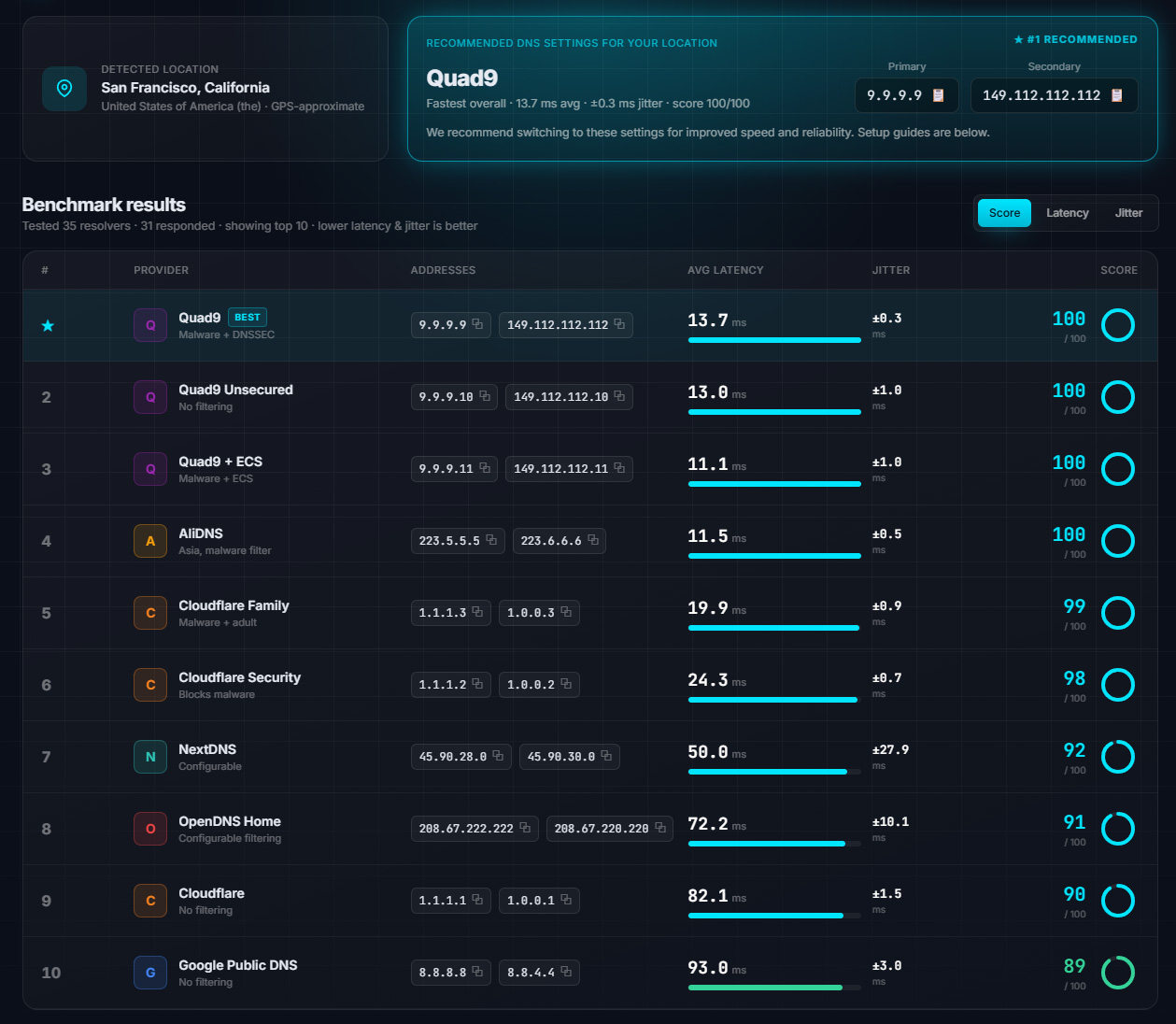
A private CA key is inert on its own. To spend one you must already be in the path between a client and the service it wants, and the cheap ways to get there are not exotic: a poisoned resolver answer, a rogue DHCP server, a captive network, or a hijacked route. For the overwhelming majority of networks, the realistic interception primitive is name resolution.
That is what actually changed on 17 October, and it is worth stating plainly: nothing about your resolver posture moved. The consequence of it did. Under normal conditions, a hijacked DNS answer is self-limiting, because the attacker cannot produce a certificate for the name they have stolen and the user gets a loud, unmissable warning. DNS tampering fails noisily, which is precisely why most teams treat resolver integrity as an availability concern rather than a confidentiality one. With one of these eight keys in hand, the same tampering would have ended in a clean padlock. A DDoS attack writes itself into every graph you own; this writes nothing at all, because the handshake succeeds.
DNS over HTTPS is the usual recommendation at this point, and it remains a good one, but the circularity deserves acknowledging: DoH protects the resolution path with a TLS connection validated against the same trust store that was carrying these intermediates. Encrypting the transport does not help if the thing you are trusting to authenticate the far end is the layer that failed. The durable advice is duller and older — know which resolver each host is actually using, choose resolvers you have reason to trust, and keep records you could query afterwards.
The remediation is the bigger operational risk
Most of the fixes that shipped do not block eight keys. They remove a root — because removing a root is the only lever most trust stores expose. That also breaks every legitimate certificate chaining through emSign ECC Root CA - G3. Mozilla, Canonical and Red Hat have each warned of server-side outages as a result, and Chrome intends to drop the root in root store version 43, expected to reach devices on 27 October.
| Component | Fixed in | Approach |
|---|---|---|
| Go | 1.27.3, 1.26.10 (CVE-2026-111943) | Denylist in crypto/x509; applies to system verifiers too; rebuild required |
| Firefox / NSS | 158.0.1, ESR 153.5.1, ESR 115.43.1; NSS 3.131.1 | OneCRL block, then root removal |
| Node.js | 26.12.1, 24.22.1, 22.23.4 | Key rejection plus an updated root list |
| Bundles | certifi 2026.10.19, webpki-roots 1.0.10, Composer ca-bundle 1.6.0, Debian DSA-6572-1, Ubuntu USN-8944-1 | Root removal |
Go is the instructive case. Its fix is compiled in, so upgrading the toolchain changes nothing for binaries already built and shipped; every affected service has to be rebuilt and redeployed. That is a decent proxy for the wider problem, and it is a cloud security problem as much as a desktop one: container images carry frozen CA bundles, appliances carry firmware trust stores, and language runtimes carry their own. Nobody maintains an inventory of these. There is no zone file for the trust store, no console that lists every copy, and no way to ask a fleet which roots it currently honours without going and looking.
What to check this week
- Find your trust stores. Operating systems, container base images, language bundles, appliances and anything with a pinned CA list. This is the inventory nobody has, and building it is the lasting IT security outcome of the incident.
- Rebuild Go services against 1.27.3 or 1.26.10. A toolchain upgrade alone does not change a deployed binary.
- Test before you distrust. Removing
emSign ECC Root CA - G3can break working services. Stage it. - Verify from the client side using the public test hosts the disclosure provides, rather than assuming an update landed.
- Baseline resolution. Confirm which resolver each managed host genuinely uses, and keep logs long enough to answer a retrospective question.
What it means
The open questions are the awkward ones. Nobody can say whether these keys were used between April 2025 and October 2026, because outside CT-enforcing browsers there is no method to detect past misuse. eMudhra's root cause is unpublished. Mozilla says it does not currently believe other CAs are affected and Chrome says it checked its whole store and found no other instance of this failure mode — two reassuring statements that both rest on the same assumption, namely that this class of defect is visible to anyone who looks.
The web's trust model is not short of cryptography. What this tech infrastructure incident exposed is that it is short of inventory and short of revocation reach: browsers were patched in hours because they have a push channel, while the far larger population of non-browser clients depends on somebody noticing, rebuilding and redeploying. For eighteen months the certificate layer that normally makes DNS tampering fail loudly would have quietly endorsed it instead, and that is the dependency worth writing down — the padlock was never the security boundary. Name resolution was, and the padlock was just the part that complained when it went wrong. Compare this with the ccTLD registry hijacks of 8 October: different layer, same lesson about what sits beneath the controls you actually monitor.
Sources
- The Hacker News — Eight eMudhra CA Keys Compromised, Triggering Emergency Fixes Across Browsers and Software
- The Register — Indian certification authority eMudhra's private keys compromised
- SOC Prime — CVE-2026-111943: Go Blocks Compromised eMudhra CA Keys
- eMudhra Intermediate CA Compromise — disclosure and remediation guidance
Related articles
Browse every DNS news article by month →
DNS angle
Review resolver logs for the systems discussed above and compare unexpected names with your approved services. A successful lookup does not establish that a destination is safe. Use the DNS lookup tool to inspect current answers, then compare them with your own resolver and incident records.
Source: The Hacker News — Eight eMudhra CA Keys Compromised, Triggering Emergency Fixes Across Browsers and Software ().