Infrastructure
Tech Infrastructure: The DNS Root Key Rolls Over Today
Published October 11, 2026 · DNS Benchmark Pro Editorial · Reading time: 7 minutes
TL;DR — Today, 11 October 2026, the DNS root zone changes its Key Signing Key. KSK-2024 (key tag 38696) becomes the only key signing the root DNSKEY set, retiring KSK-2017 (key tag 20326) after nine years. Validating resolvers that already hold the new trust anchor will notice nothing whatsoever. Those that do not lose the ability to validate the root — and therefore everything beneath it — and begin answering SERVFAIL for signed and unsigned domains alike. Because the root DNSKEY set carries a 48-hour TTL, breakage arrives on a delay rather than at the moment of the change. This is the rarest category of tech infrastructure event: a scheduled, global, single-point change to the trust anchor that every DNSSEC validator on the planet depends on.
There is no CVE in today’s lead story, nobody is under attack and no vendor is shipping an emergency patch — which is precisely why it belongs at the top of any serious tech infrastructure briefing. At the root of the Domain Name System sits one cryptographic key anchoring the chain of trust for the entire namespace. Today, for only the second time since the root was signed in 2010, that key changes.
What changes today, and what does not
The distinction matters more than the ceremony. KSK-2024 did not appear today; it has been published in the root zone since 11 January 2025. What changes is which key produces the signature over the root DNSKEY set. Resolvers have had twenty-one months to notice, accept and store it. Today is the deadline, not the announcement.
| Element | Detail |
|---|---|
| Event | Root zone KSK rollover — the incoming key begins signing the root DNSKEY RRset |
| Date | 11 October 2026, managed by ICANN and PTI as the IANA Functions Operator |
| Incoming key | KSK-2024, key tag 38696, RSA/SHA-256, 2048-bit |
| Outgoing key | KSK-2017, key tag 20326 — stops signing today, scheduled for revocation in Q1 2027 |
| Pre-published | 11 January 2025 — twenty-one months of advance visibility in the root zone |
| RFC 5011 eligibility | 10 February 2025, after the 30-day hold-down period |
| Not changing | The signing algorithm (a key replacement, not an algorithm migration), the Zone Signing Key cadence, the thirteen root server identities, every DS record below the root |
| Failure mode | SERVFAIL from an affected resolver for the whole namespace, not for selected zones |
| Delay to failure | Up to 48 hours — the TTL on the cached root DNSKEY RRset |
| Who must act | Operators with hand-configured trust anchors, resolver software that cannot write to its key store, or images not refreshed since 2024 |
| Telemetry | RFC 8145 trust anchor signalling; RFC 8509 root key sentinel for external testing |

Twenty-one months of pre-publication did most of the work
The mechanism that makes a global key change survivable is RFC 5011, which defines how a validator automatically adopts a new trust anchor it observes in the zone it already trusts. When KSK-2024 appeared alongside KSK-2017 in January 2025, every resolver running automated trust anchor management started a 30-day hold-down timer. On 10 February 2025 the new key became eligible for installation, and adoption jumped sharply within days.
Verisign, the Root Zone Maintainer, publishes measurements derived from RFC 8145 signalling and reports that incoming-key adoption has tracked the 2017 rollover almost exactly: beyond roughly 500 days from first publication, more than 95 percent of signalling sources carry the new key. That is not 100 percent, and the long tail is where the risk lives — about 3.5 percent of sources still report KSK-2010, revoked in 2019, which says a great deal about how long a stale trust anchor survives unnoticed.
This is why the 2017 attempt was postponed by a year: contradictory signalling data made it impossible to tell how many validators were genuinely unprepared, and ICANN chose to delay rather than guess. That rollover completed in October 2018. A later key, generated in 2023, was retired when the hardware security modules holding it reached end of support — which is how KSK-2024 became the key in use today.
Who actually breaks, and why it will not look like an attack
The failure is local, deterministic and total. A validating resolver that cannot authenticate the root DNSKEY set has no valid path to any zone, so it returns SERVFAIL for every query — including unsigned zones, because the proof that no DS record exists is itself part of the chain. Users call this “the internet is down”; your monitoring sees one resolver failing while its neighbour is fine.
That asymmetry is the diagnostic signature. A DDoS attack degrades everything reachable through a path. A zero-day vulnerability in resolver software produces crashes, restarts and memory anomalies. A trust anchor failure produces clean, instant, uniform SERVFAIL responses from one resolver while a second resolver on the same network answers normally. If you see that pattern this week, check the trust anchor before you check anything else.
Two second-order effects matter. The 48-hour DNSKEY TTL means a resolver can keep working for two days and then fail at an arbitrary moment — Monday morning is a realistic arrival time for a Sunday change. And forwarders inherit the problem: a branch device that forwards to a central validator needs no trust anchor of its own, but it relays that validator’s failures faithfully, making the blast radius look far larger than the single misconfigured host responsible.

How to check your resolvers before the TTL runs out
Seeing key tag 38696 in a DNS response proves only that the root zone contains the key. What matters is whether it sits in the resolver’s own active trust anchor store. Check the configuration, not the answer.
- Inspect the trust anchor file.
bind.keysfor BIND 9,root.keyfor Unbound and PowerDNS Recursor,root.keysfor Knot Resolver. Grep for38696. If it is absent, nothing else on this list matters yet. - Ask the running process, not the file.
rndc managed-keys statusandrndc secrootson BIND;unbound-anchor -lon Unbound. A process started before the key was written is still using the old anchor set in memory. - Verify write access to the key store. The commonest cause of a stalled RFC 5011 update is a resolver that cannot persist its managed keys: a read-only container layer, a tightened permission, or a package upgrade that moved the path.
- Run the RFC 8509 sentinel test from each client network. Query
root-key-sentinel-is-ta-38696androot-key-sentinel-not-ta-38696. If the first resolves and the second returnsSERVFAIL, the resolver trusts the key; if both resolve, it does not implement the sentinel and the result is inconclusive. - Enumerate every validator, including the ones you forgot. Container sidecars, appliance-embedded resolvers, out-of-band management links, VM images built before 2025 and cloud security tooling with a bundled resolver are where stale anchors survive.
- Raise monitoring for 72 hours. Alert on
SERVFAILrate per resolver rather than in aggregate; an aggregate graph will hide one failed validator behind four healthy ones. - If a resolver has already missed the window, install the trust anchor manually from the IANA-published root anchors, restart the service, and treat the automated update as broken until you have proven otherwise.

Why this tech infrastructure change rewards measurement over faith
The difficulty with a rollover is that “we are fine” and “we have not failed yet” look identical for 48 hours. Caches mask the transition, so quiet alarms today are not evidence of readiness. The only useful signal is per-resolver and measured.
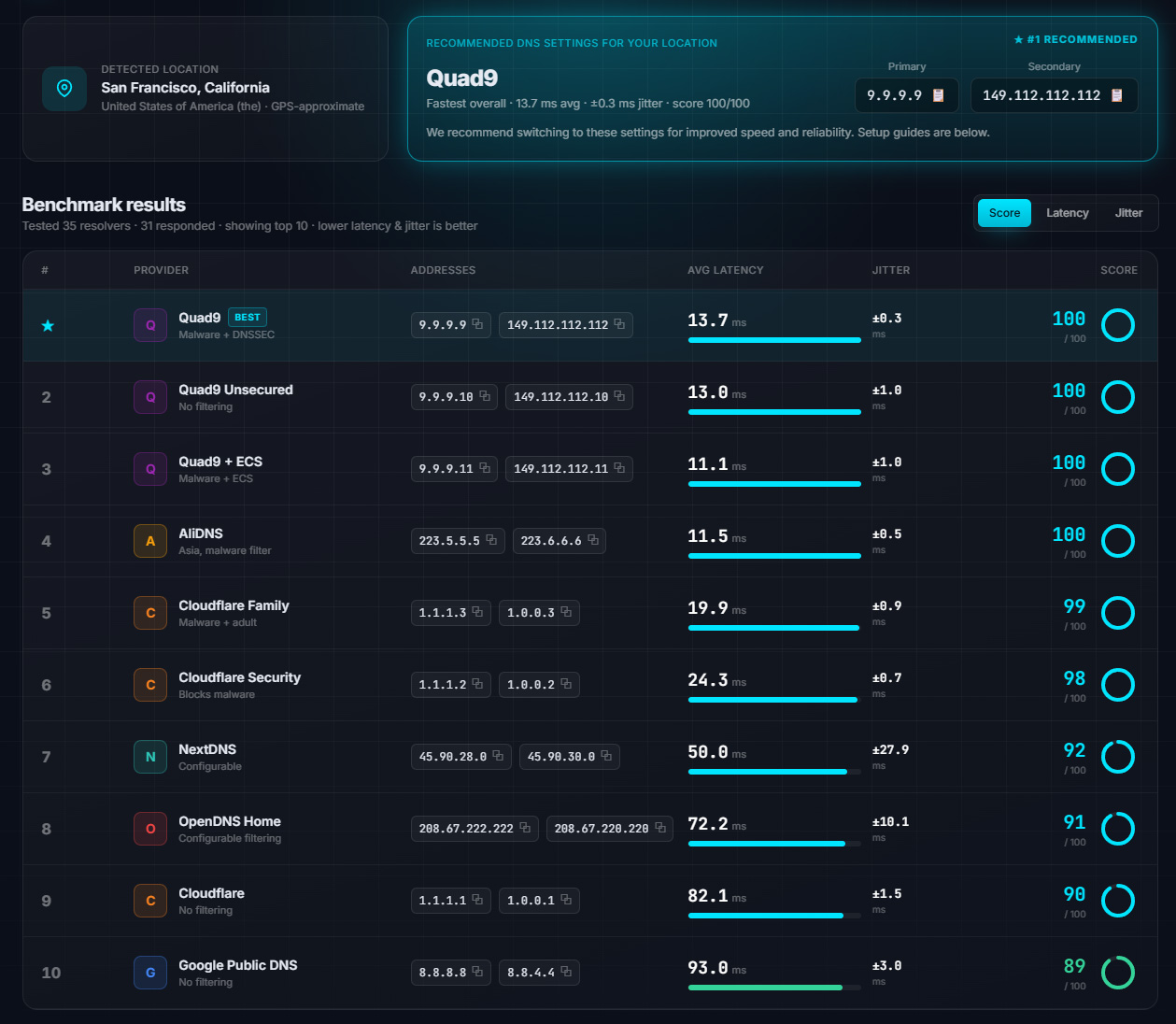
Knowing which resolvers your estate genuinely answers to is the prerequisite for the whole exercise, and our free DNS benchmark and network diagnostic tool measures them individually rather than through one vantage point. To track how a change propagates across resolvers over the next two days, use our DNS propagation checker; and our guide to DNS over HTTPS and DNS over TLS is worth re-reading — encrypted transport changes who can see your queries, not which key validates the answers.
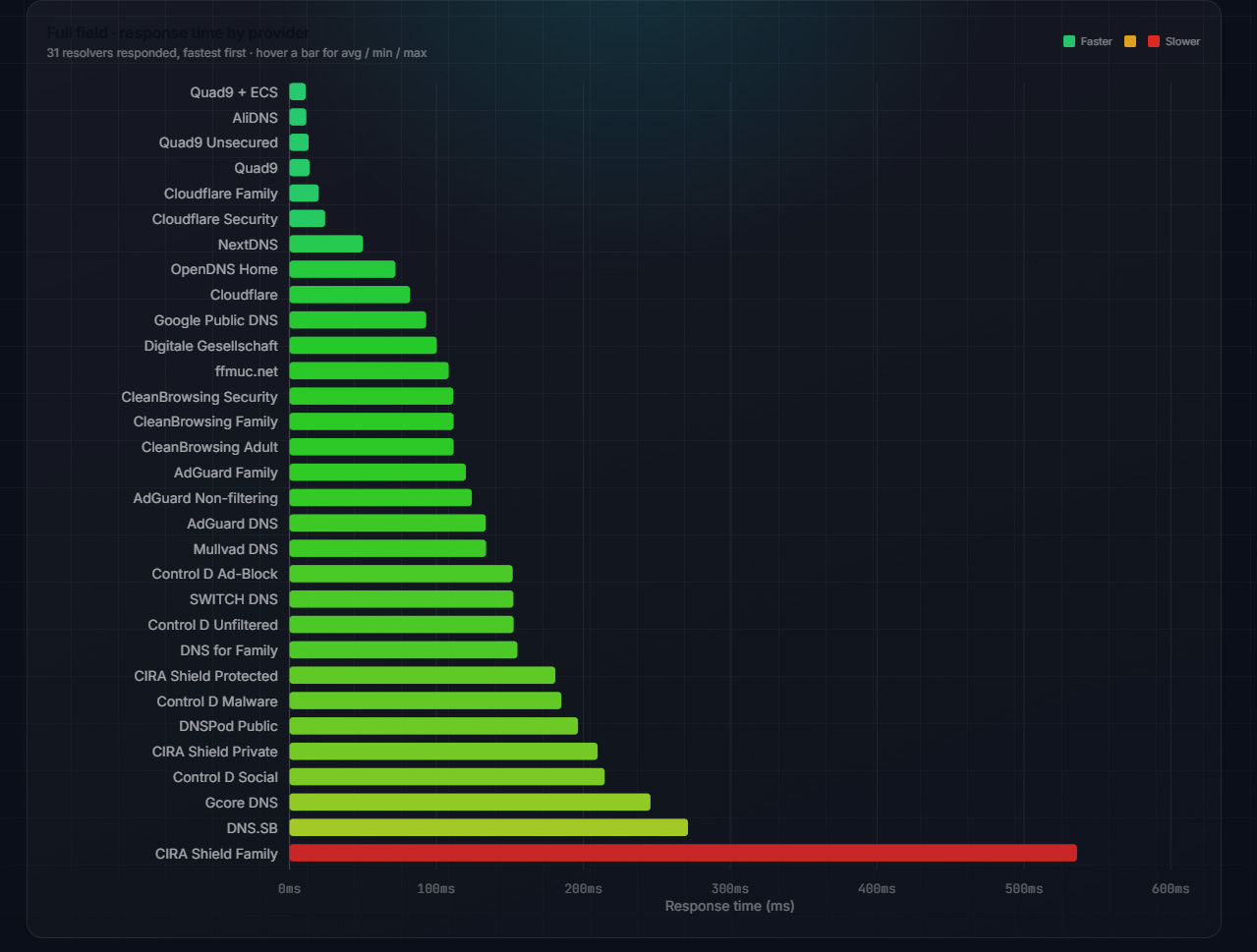
SERVFAIL is cheap to return.Industry impact: success looks like nothing at all
Consider what today demonstrates. A globally distributed system with no central operator, no maintenance window and no way to coordinate its participants is changing the single credential underpinning its security model — and the expected outcome is that nobody notices. As tech infrastructure achievements go, that is a remarkable one, delivered by pre-publication, a documented automation standard and a refusal to rush ambiguous data.
The lesson for anyone running server infrastructure concerns the shape of the risk. Exposure is not concentrated in the well-run resolver fleet an operations team watches daily; it is in the forgotten validator inside an appliance, the image frozen in 2024, the lab network nobody has logged into since the last audit. Trust anchors expire on a schedule set by someone else, and IT security programmes track those poorly.
The practical takeaway: today is not the end of the task. Watch per-resolver SERVFAIL rates through to Tuesday, confirm that automated trust anchor updates are writing to disk rather than failing silently, and remember that KSK-2017 stays visible in the root zone until its revocation in Q1 2027 — so a resolver that quietly reverts to the old anchor has one more chance to surprise you.
Sources
- ICANN — ICANN publishes guidance to help prepare for the October 2026 root KSK rollover
- Verisign Blog — The 2024–2026 root zone KSK rollover: updates and observations
- APNIC Blog — Podcast: the October 2026 root KSK roll
- Akamai — The October 2026 root KSK rollover: is your DNS really ready?
Independent editorial analysis published by DNS Benchmark Pro / Genext Information Systems. The ICANN headquarters photograph is by Coolcaesar, via Wikimedia Commons, licensed CC BY 4.0; the Verisign signage photograph is by Coolcaesar, via Wikimedia Commons, licensed CC BY-SA 3.0; the ICANN logo is a public-domain file via Wikimedia Commons, reproduced in monochrome on a dark background; the benchmark screenshots are original captures of the DNS Benchmark Pro engine. No images on this page are AI-generated. DNS Benchmark Pro is not affiliated with ICANN, PTI, IANA or Verisign.