DNS Security
DNS Security vs ClickFix: Inside the ROMULUS Platform
By Nattapong Sukkasem · Published · Updated .
TL;DR — Forescout's Vedere Labs has published an analysis of ROMULUS, a previously undocumented delivery platform sitting behind ClickFix campaigns. Six servers run the same admin panel, handing out obfuscated PowerShell stagers keyed to twelve-character tokens that pull either a trojanised Stardock installer or LegionLoader. One archive under 1 MB expands into a roughly 842 MB executable, almost all of it padding designed to exceed what scanners accept. No exploit is involved anywhere in the chain — the victim runs the first command personally. That is what makes this a DNS security story rather than a patching one.
Every control an organisation buys has a budget. A sandbox will only accept a file up to a certain size; an analyst will only read so far down an alert queue. ROMULUS, documented by Forescout on 15 October 2026, is interesting because almost every technique in it targets one of those budgets, not a vulnerability. The one checkpoint in its chain with no budget to exhaust — whose cost is identical whether the payload is a kilobyte or a gigabyte — is name resolution. That is the DNS security argument this campaign makes better than most.

What Forescout found
Vedere Labs found a ROMULUS server while working an unrelated incident, then pivoted on its login page through VirusTotal and Shodan to find five more. What they describe is not a bespoke malware server but a product: a dark-themed panel with a JavaScript login form posting to /api/login, and a statistics page reporting unique installs, total runs, a fourteen-day timeline and a country breakdown. Someone built this to be operated by people who did not write it.
| Item | Detail |
|---|---|
| Research | Forescout Research — Vedere Labs, published 15 October 2026, credited to Sai Molige and the Vedere Labs team |
| What ROMULUS is | A reusable, multi-payload ClickFix delivery backend with an admin web panel, not a single hard-coded malware host |
| Infrastructure | Six IP addresses serving the same panel: 96.62.224[.]81, 86.109.75[.]7, 151.240.151[.]223, 23.94.145[.]224, 93.152.224[.]118, 2.27.248[.]127. Only the first two were analysed in depth |
| URL scheme | /s/<token> serves the PowerShell stager, /app/<token>/<file> an MSI. Tokens are twelve hexadecimal characters, possibly mapping to a victim, campaign or delivery job |
| Decimal addressing | Stager URLs use decimal-encoded IPs: 1450003207 is 86.109.75[.]7, 1614733393 is 96.62.224[.]81 |
| Route A | IconEdit2Turb.msi, presenting itself as the “Stardock Smart DeElevation Tool”, sideloads a patched DeElevator64.dll and a loader named I++u.dll beside the legitimate DeElevate64.exe |
| Route B | A password-protected archive from orbitflownetwork[.]lol unpacks through three layers to LegionLoader, which reports to smashshape[.]com at /nfront.php and /nback.php |
| Carrier size | Final executable roughly 842 MB, of which about 881.7 MB of declared .reloc section holds just 108 bytes of genuine relocation data |
| Prior sighting | One host was reported by Huntress on 28 September 2026 in a campaign using ChatGPT Custom GPTs to steer victims to ClickFix lure pages |
| Vulnerability used | None. No CVE, no exploit and no zero-day vulnerability appears anywhere in the chain |
| Open questions | Operator unknown; Forescout reports no evidence of a link to the RomulusLoader named by Proofpoint, cannot confirm the novatrafficcore[.]lol association, and could not explain five .bin files the final binary never references |
Two routes out of one panel
Both routes begin identically. The victim, talked into opening a Run dialog by a fake verification prompt, executes a PowerShell command that fetches a stager from /s/<token>. The stagers come from a shared template, rebuilt at runtime from an array of negative integers and executed through [scriptblock]::Create. Each deletes itself on the way out.
Route A downloads the Stardock-branded MSI over TLS 1.2, clears the mark-of-the-web with Unblock-File and installs silently with msiexec /i /qn /norestart. Of the seven components it drops, only the signed Stardock executable is genuine. Forescout notes the chain matches what Huntress described in September.
Route B is the more inventive half. The stager hides its console window through dynamically resolved GetConsoleWindow and ShowWindow calls, pulls a 7-Zip archive from orbitflownetwork[.]lol and the genuine 7zr.exe from GitHub, checks both file headers, then extracts with a hardcoded password. Inside is another archive, a second password file, five unexplained blobs and the carrier. Using a real 7-Zip binary is the point: on a telemetry timeline the step reads as routine administration.
The 842 MB file that is mostly nothing
Roughly 881.7 MB of the carrier is a declared relocation section containing a repeating sixteen-byte value and 108 bytes of real data; everything meaningful lives in a prefix of about 2 MB. Because the padding compresses almost perfectly, the archive stays under a megabyte in transit and only becomes enormous on disk.
That asymmetry is engineered. Multi-hundred-megabyte files blow past upload ceilings on analysis services, exhaust sandbox budgets and get skipped by scanners with a maximum file size. The attacker pays a few hundred kilobytes of bandwidth; the defender pays a timeout. The same trade runs through the three stages of AES-256 and byte-reversal that follow.
Why this is a DNS security problem
Work backwards and ask which defence could have fired. Email filtering never saw anything: the lure is a web page. Application allow-listing is weak, because PowerShell and msiexec are signed Microsoft binaries and 7zr.exe came from GitHub. Patching is irrelevant. Every perimeter control was bypassed not by cleverness but by sequence: ClickFix puts the human first, and once a user has pasted a command into the Run box, everything in front of the user has already been passed.
What remains is the network, and specifically the moment each hop has to be found. The stager hop needs no lookup, because the decimal-encoded address is the destination. The archive hop does: orbitflownetwork[.]lol must resolve before a single byte of that 842 MB carrier arrives, as must smashshape[.]com every time LegionLoader reports in. The named hops sit after the unnamed one, so resolver policy does not prevent the intrusion — it interrupts it, between the stager running and the payload landing.
That window is narrow but real, and cheap to hold. Resolving a hostname costs the same whether the file behind it is one kilobyte or nine hundred megabytes — precisely the budget ROMULUS cannot inflate. A protective resolver declining newly registered and novelty top-level domains would have stopped Route B at the archive. A DDoS attack trips every alarm an organisation owns within seconds; this chain is designed to trip none, yet the resolver log is one place it must leave a mark.
One caveat, plainly. If the malware resolves over DNS over HTTPS straight to a public endpoint, it never consults the configured resolver and the policy never applies. That argues for enforcing resolution at the gateway and knowing which resolver each managed host actually uses — and why checking the setting on the Windows hosts in your estate is worth the afternoon.
Practical steps for IT security teams
- Alert on decimal-notation URLs. Forescout highlights eight-to-ten digit decimal addresses in command lines as high-signal and low-noise. Legitimate software effectively never does this.
- Hunt the PowerShell shape, not the payload. A command combining
-NoProfile,-ep bypassor-w hiddenwith a URL, or a long script run from%TEMP%, is common to both routes. - Flag silent MSI installs.
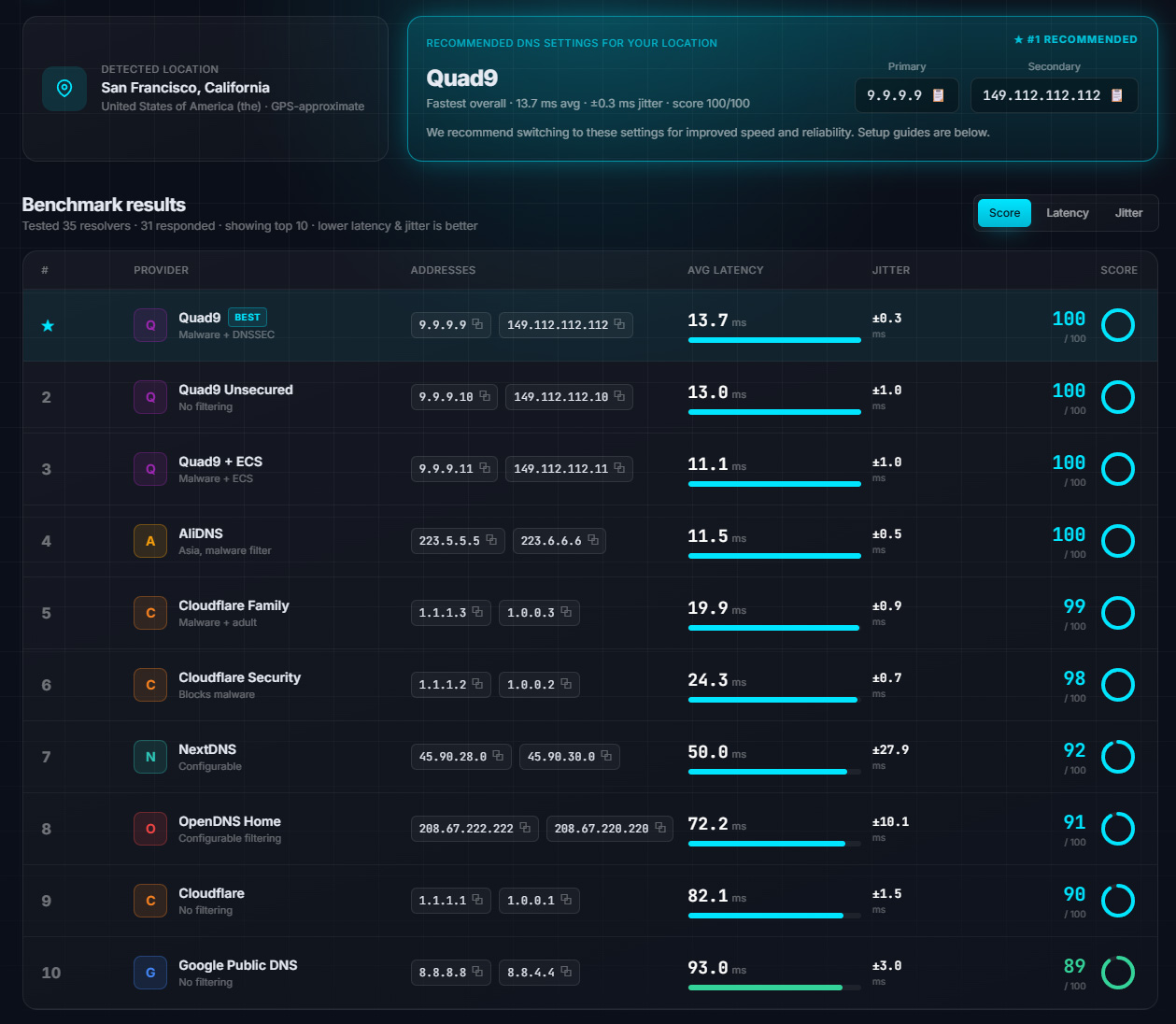
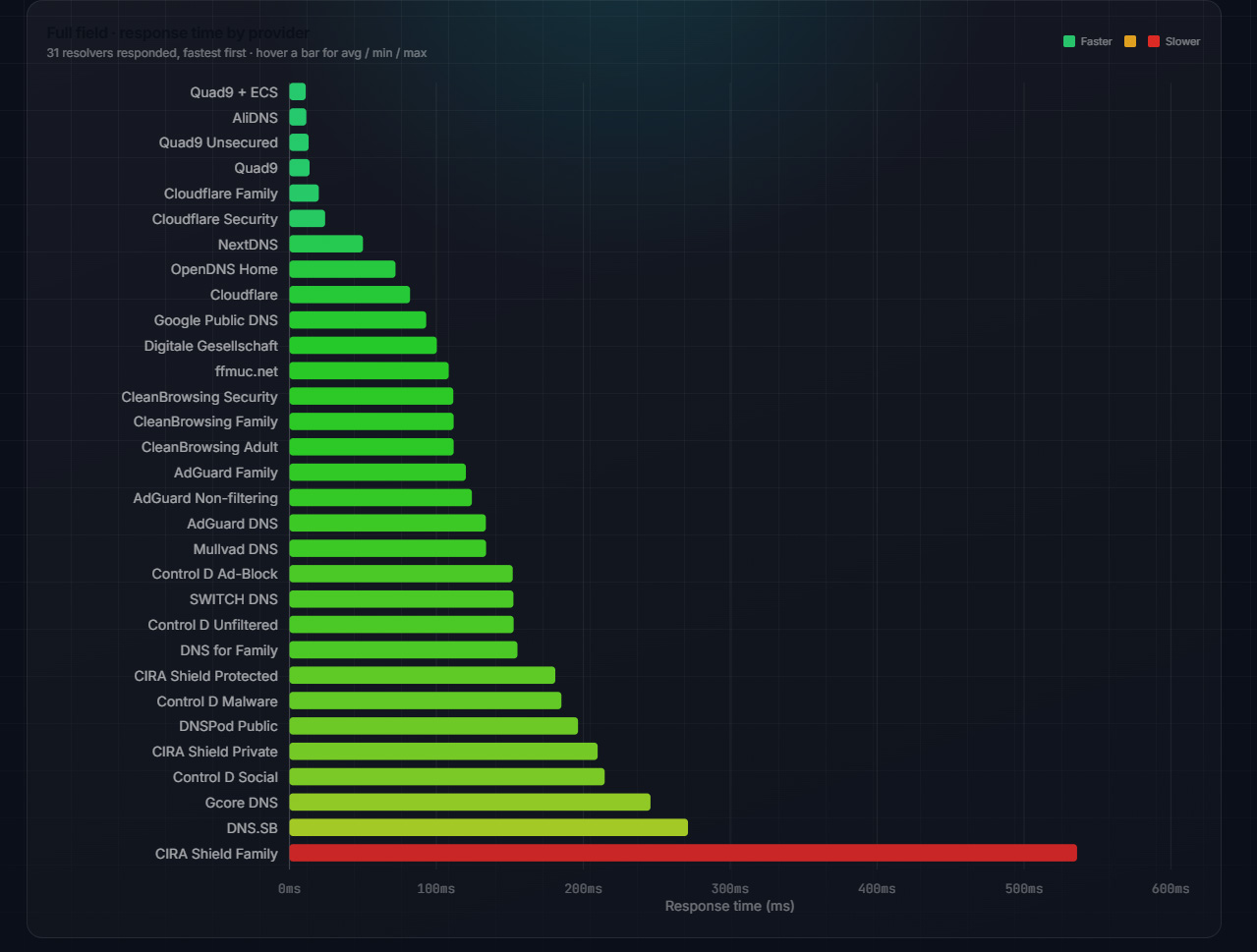
msiexec /i ... /qn /norestartfrom%TEMP%paired withUnblock-Fileis worth reviewing every time. - Apply reputation policy at the resolver. Blocking newly registered and low-reputation top-level domains is the highest-yield IT security control against delivery chains that rotate hostnames faster than signatures follow.
- Log resolution centrally and keep it. Query logs survive a wiped endpoint, and a lookup for a C2 hostname is often the only durable record a host was involved.
- Rotate browser credentials. LegionLoader targets Chrome's stored secrets: assume saved passwords and session cookies are gone.
Industry impact
ROMULUS matters less as malware than as a sign of how delivery has been commoditised. Forescout cannot say whether this is a private tool, a commercial service, an affiliate framework or code passed around — and that uncertainty is the finding. A panel with a login page, per-campaign tokens and a country-level dashboard is infrastructure built for tenants. The same reasoning that made legitimate commercial software an attractive payload earlier this month applies to the delivery layer: standardise it, rent it out, let affiliates supply the lures.
It also closes off a comfortable assumption. The implicit model of intrusion has long put a vulnerability near the start, making patch cadence a reasonable proxy for exposure. Nothing here fits that model: a programme measuring itself purely on zero-day vulnerability response time would score this campaign at zero risk while it ran. The defences that actually engage are the ones watching behaviour and naming, and those never produce a satisfying remediation number.
The practical conclusion for DNS security is modest and worth acting on anyway. The six panels sat on ordinary rented server infrastructure, and the cloud security posture of those hosts was never the issue; they were simply reachable, and their names and addresses were the only part of the operation the attacker had to publish. Delivery platforms rotate hostnames because hostnames are what gets burned, and that churn is what a resolver is positioned to see. Teams that treat DNS security as an access-control surface rather than a lookup service get a checkpoint that works where everything upstream has already been skipped — which, increasingly, is most attacks.
Sources
- Forescout Vedere Labs — ROMULUS: Analysis of a New Multi-Payload ClickFix Delivery Platform
- The Hacker News — Hackers use new ROMULUS ClickFix platform to deliver LegionLoader and other malware
- IT Security Guru — Forescout uncovers ROMULUS malware delivery platform behind ClickFix attacks
Related articles
Browse every DNS news article by month →
DNS angle
Review resolver logs for the systems discussed above and compare unexpected names with your approved services. A successful lookup does not establish that a destination is safe. Use the DNS lookup tool to inspect current answers, then compare them with your own resolver and incident records.
Source: Forescout Vedere Labs — ROMULUS: Analysis of a New Multi-Payload ClickFix Delivery Platform ().