Data Breach
Data Breach Update: Pentagon DMDC Exposes 3M Records
Published October 3, 2026 · DNS Benchmark Pro Editorial · Reading time: 6 minutes
TL;DR — The US Department of Defense has begun notifying more than three million people that unauthorised users exploited a security vulnerability in a Defense Manpower Data Center file-sharing system. Access began in October 2025 and continued until the flaw was found on 16 July 2026 — roughly nine months of undetected read access. Some 2.76 million living individuals and 294,000 deceased are affected. The exposed files held unencrypted Social Security numbers, names, dates of birth, contact details, sex, race and military occupational specialties. No CVE, no product name and no attribution have been published.
The most consequential data breach update of the week is not a ransomware leak site or a dramatic zero-day vulnerability in an internet-facing appliance. It is something far more ordinary, and for that reason far more instructive: a file-sharing server inside one of the most heavily defended networks on earth quietly handed out unencrypted personnel records for nine months, and nobody noticed until July. The Defense Manpower Data Center began mailing notification letters on 1 October 2026, dated 18 September.
What the DMDC is, and why these records matter
The DMDC was established in 1974 and is the Department's central personnel data authority. It maintains more than 60 million records covering active-duty and reserve service members, civilian employees, contractors, dependants, retirees and veterans, and it is the system of record used to decide benefits eligibility, access authorisation and identity verification across the Department. When a Common Access Card is validated, the answer ultimately traces back to DMDC data.
That makes the exposed fields unusually dangerous in combination. A Social Security number paired with a name and date of birth is standard identity-theft fuel. The same record paired with a military occupational specialty, service history and current contact details is targeting data — useful for social engineering, for recruitment approaches by foreign intelligence services, and for building a credible pretext against anyone whose job title implies access worth having.
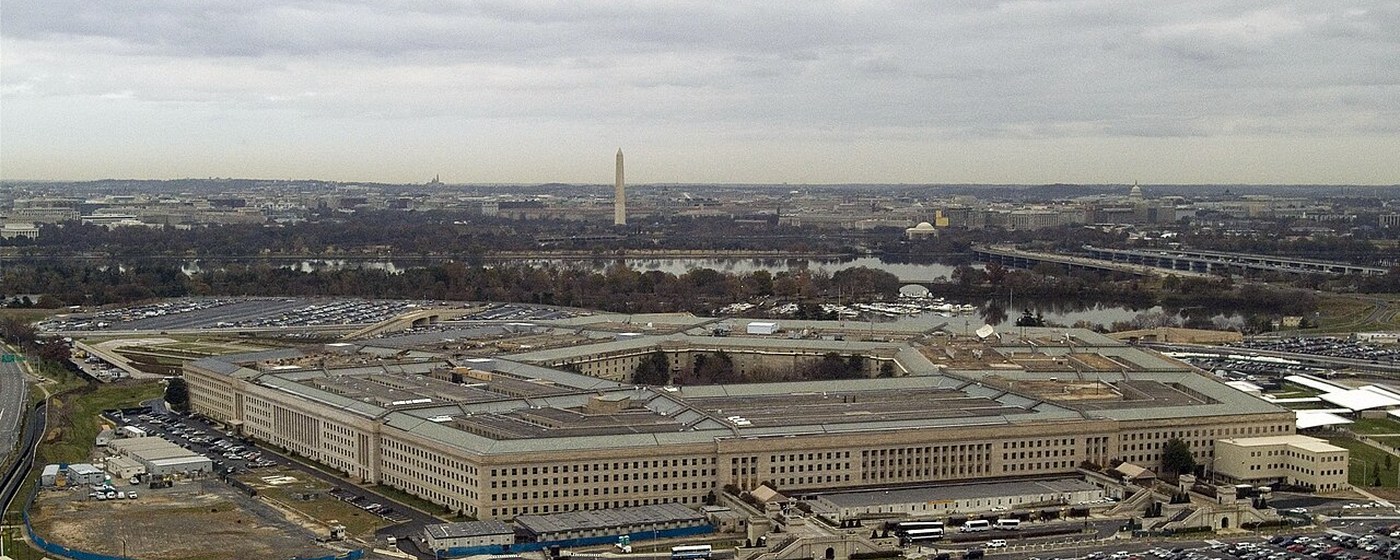
Nine months of access to an unencrypted file share
The Department’s own language is careful and revealing. Analysis identified that between October 2025 and the date of discovery, “a small number of unauthorized users accessed files” containing personal information. The vulnerability was patched and the system restored immediately once found on 16 July 2026. Officials say there is no indication the information has been misused, but have not explained how that conclusion was reached, who the unauthorised users were, or whether the files were copied.
Three technical facts are doing most of the work here. First, the data was unencrypted at rest on the compromised server, which turns a file-read bug into a full disclosure rather than a nuisance. Second, the dwell time was about nine months, which means the detection gap was not in the vulnerability but in the monitoring around it. Third, the affected component was a file-sharing system — the same category of software that has produced the largest mass-exploitation events of the past three years.
The file-transfer blind spot in enterprise IT news
Managed file transfer and departmental file-sharing platforms occupy an awkward position in most estates. They are provisioned to move bulk data between teams and agencies, so they are deliberately granted broad read access to sensitive stores. They are frequently exempted from the controls applied to primary databases, because “it is just a transfer staging area.” And they are rarely instrumented the way a production application is: there is often no per-file access log, no baseline of normal download volume, and no alert when one account pulls a hundred thousand records instead of ten.
That combination is why this data breach update should read as a warning about architecture rather than about one vendor. The Department has not named the product, and on current evidence nobody outside the investigation knows whether this was a known CVE left unpatched or a flaw unique to a bespoke system. Either way, the controls that would have shortened nine months to nine hours are the same.

What IT security teams should do with this data breach update
- Inventory your file-transfer estate. Every MFT appliance, SFTP jump box, departmental share and “temporary” staging server. The ones nobody owns are the ones that run unpatched.
- Encrypt at rest, with keys the file server cannot read. If a read primitive on the host yields plaintext PII, you have no second line of defence.
- Log and baseline access volume. Per-account, per-day file counts and byte totals, with alerting on deviation. This is the single control that converts a nine-month exposure into a same-week detection.
- Filter and inspect egress. Bulk exfiltration has to leave somehow. Default-deny outbound from data-handling server infrastructure, with an explicit allowlist, is cheap and effective.
- Minimise what is staged. Nine months of retained extracts is a choice. Shorten retention and the blast radius shrinks with it.
The DNS security angle: exfiltration leaves resolver fingerprints
There is a reason a DNS security control belongs in that list even though this incident was not, as far as anyone has said, a DNS attack. When an attacker holding read access on a file server needs to move data out, DNS is the path most often left open. Egress firewalls that block almost everything still permit port 53 to the internal resolver, and that resolver will happily forward queries for an attacker-controlled domain. DNS tunnelling is slow, but nine months is a long time.
The defensive implication is practical. Your recursive resolvers are an exfiltration sensor you already own. Query logs from a data-handling segment should show a small, stable set of destination domains; a steady stream of long, high-entropy subdomain labels to a single zone is not normal traffic. Knowing what normal looks like — both the answer set and the network latency profile — is what makes the abnormal visible.
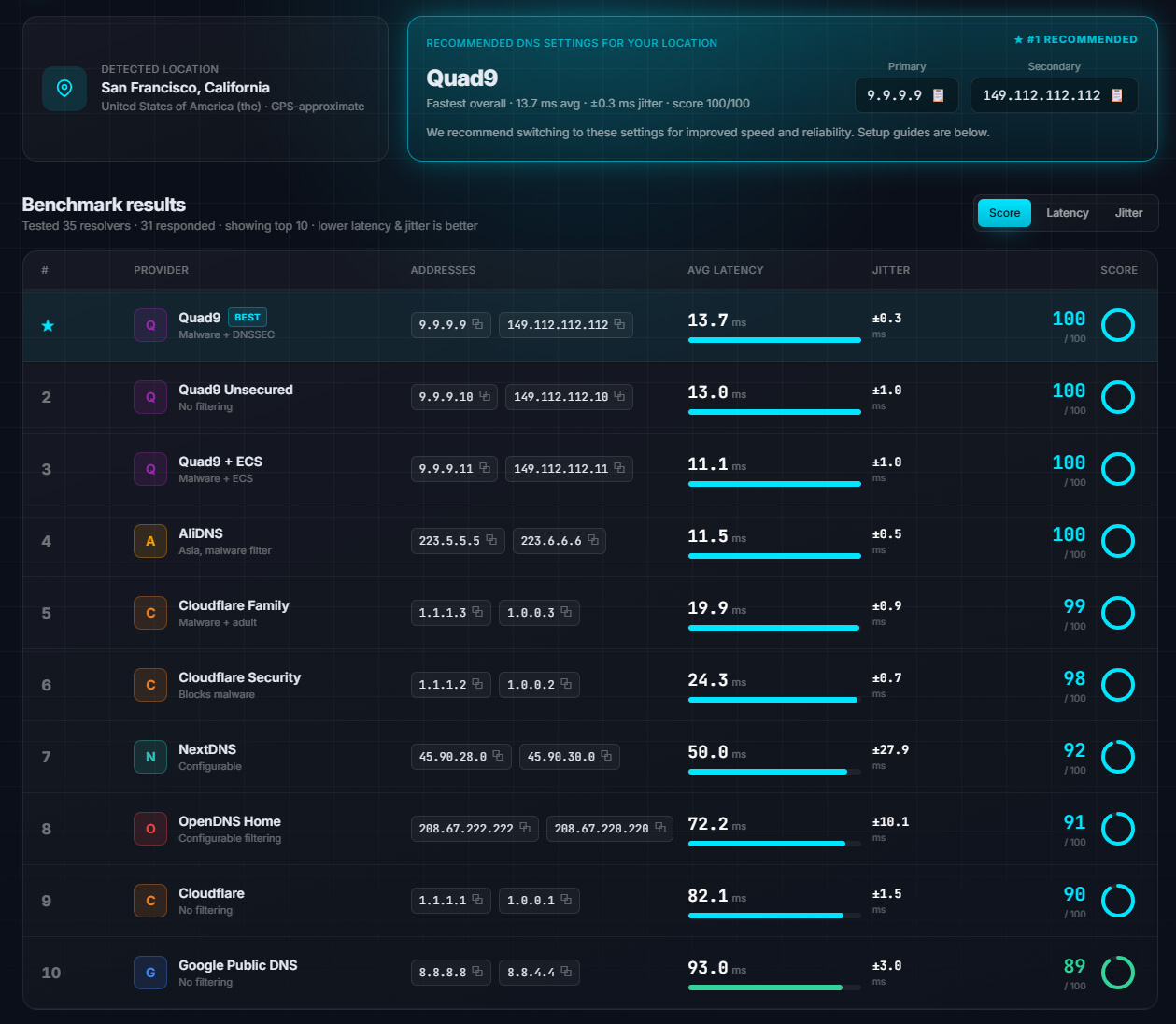
Running our free DNS benchmark and network diagnostic tool from inside a data-handling segment answers two questions at once: which resolvers are actually answering for that segment, and whether their response profile has shifted in a way that suggests interception or an added forwarder. Where policy allows, moving that resolution onto authenticated encrypted transport removes the easiest tampering path — our guide to DNS over HTTPS and DNS over TLS covers the trade-offs, including the visibility you give up and how to keep it with an internal DoH endpoint.
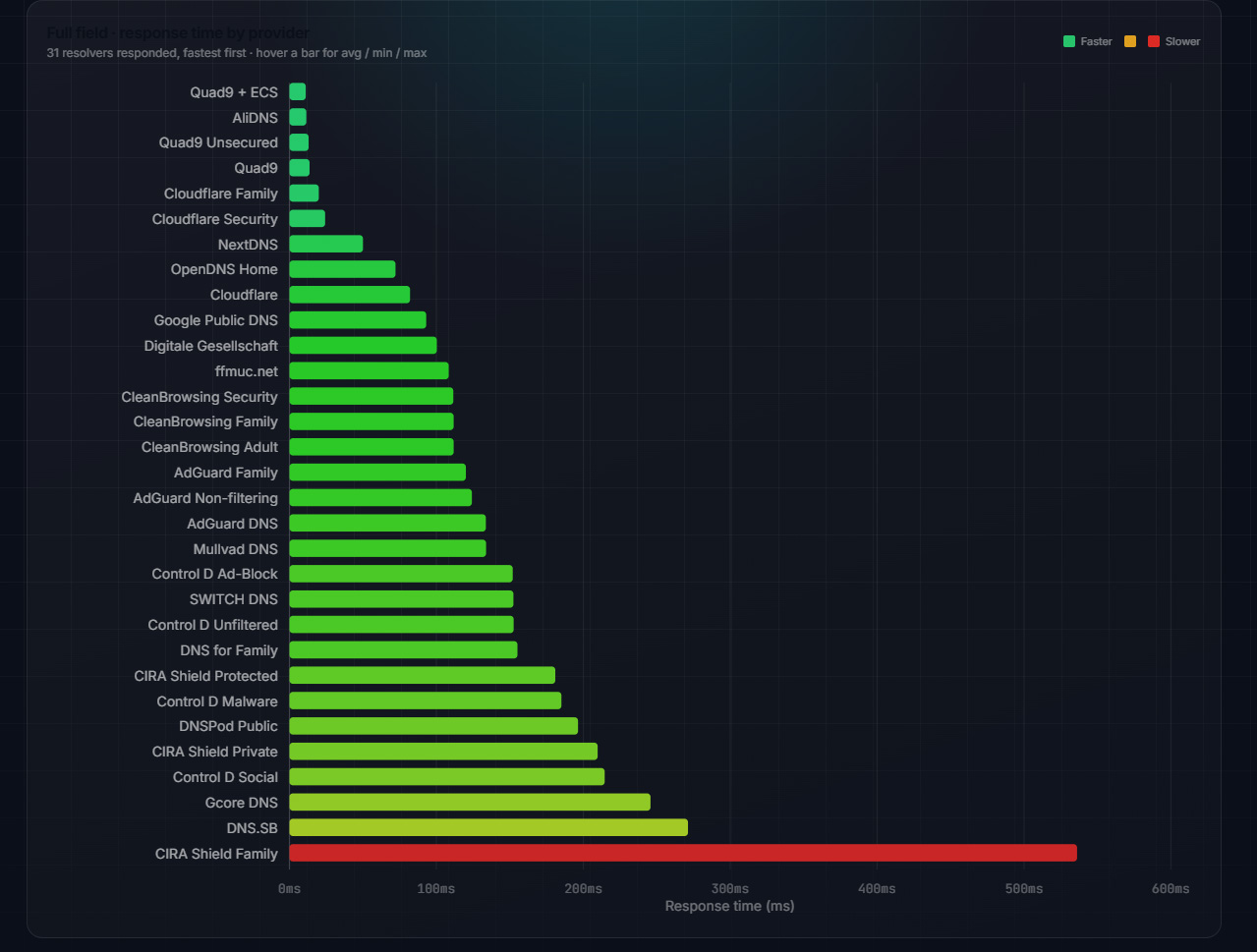
Industry impact: detection, not perimeter
Compare this with the Microsoft Titan unsigned-JWT disclosure we covered on 29 September. Different organisation, different flaw class, same shape: an internal system that was trusted because it sat behind a perimeter, holding far more data than its security posture justified, with no instrumentation capable of noticing misuse. Neither incident needed a DDoS attack, a sophisticated implant, or a cloud security misconfiguration in the usual sense. Both needed only a quiet door and nobody watching it.
The uncomfortable conclusion for anyone reading this data breach update operationally is that the US Department of Defense, with a cyber budget larger than most national IT markets, took nine months to notice unauthorised reads of three million personnel records. Perimeter spending did not catch it. Detection engineering, access logging and encryption at rest would have. Those three controls are unglamorous, comparatively cheap, and still the ones most organisations defer.
Sources
- TechCrunch — Hackers stole millions of US military personnel records during months-long data breach
- BleepingComputer — Hackers stole Pentagon personnel records of over 3 million people
- SecurityWeek — Pentagon personnel agency data breach impacts 3 million people
- Help Net Security — Pentagon breach exposes personal data of more than 3 million people
- TIME — What to know about the Pentagon breach affecting millions
- Malwarebytes — Pentagon breach exposes Social Security numbers and military records of millions
Independent editorial analysis published by DNS Benchmark Pro / Genext Information Systems. The Pentagon aerial photograph is a US Navy image by Chief Photographer’s Mate Johnny Bivera, public domain, via Wikimedia Commons; the Department of Defense seal is an official US government mark, public domain, via Wikimedia Commons; the benchmark screenshots are original captures of the DNS Benchmark Pro engine. No images on this page are AI-generated. DNS Benchmark Pro is not affiliated with the US Department of Defense.