Tech Infrastructure
Tech Infrastructure Alert: Cisco SD-WAN Zero-Day Exploited
Published October 1, 2026 · DNS Benchmark Pro Editorial · Reading time: 6 minutes
TL;DR — Cisco confirmed on 30 September that attackers are exploiting CVE-2026-76504, a CVSS 9.8 authentication bypass in Catalyst SD-WAN Manager, the controller formerly known as vManage. Percent-encoding a single character of the login path — /%6a_security_check instead of /j_security_check — walks an unauthenticated request past an access rule and into the API as an admin with the netadmin role. There is no workaround. CISA added the flaw to its Known Exploited Vulnerabilities catalog the same day and gave federal agencies until 3 October to patch.
For most enterprises the SD-WAN controller is the single most privileged box in the network. It pushes routing, segmentation, firewall and DNS policy to every branch router in the overlay. That is what makes this week's tech infrastructure advisory from Cisco so serious: the bug does not hand attackers one device, it hands them the device that configures all the others.
The disclosure lands the same week as the Citrix NetScaler zero-days, and it continues a punishing year for Cisco's SD-WAN line. According to The Hacker News, CISA's catalog now lists eight Cisco SD-WAN flaws from 2026 alone.
How the authentication bypass works
The flaw sits in the Manager's API login session handling and is classed as CWE-177, improper handling of URL encoding. The web tier enforces an authentication rule meant to keep unauthenticated callers away from a specific API endpoint, but it matches the literal path. The application behind it decodes the path before routing. Encode any one character and the two layers disagree about what was requested: the rule sees an unfamiliar path and lets it through, while the application sees its login handler.
The result is admin-level API access with no credentials. Cisco says the affected admin context carries the netadmin role, which permits every device operation the controller supports. Cisco found the issue while working a Technical Assistance Center support case — a polite way of saying a customer was already compromised — and confirmed in-the-wild exploitation in September.

Affected versions and fixed releases
Every on-premises release train is affected. Cisco-hosted SD-WAN Cloud (Managed) tenants were already moved to 20.15.605, which contains the fix. Everyone else has to upgrade.
| Release train | First fixed release |
|---|---|
| Earlier than 20.9 | Migrate to a fixed release |
| 20.9 | 20.9.10.1 |
| 20.12 | 20.12.8.2 |
| 20.15 | 20.15.6.1 |
| 20.18 | 20.18.4.1 |
| 26.1 | 26.1.2.1 |
| 26.2 | 26.2.1 |
The Cisco bug ID is CSCww79570. The three-day federal deadline is unusually short and signals that CISA regards internet-reachable controllers as an emergency rather than a patch-cycle item.
Why a controller compromise is a DNS security problem too
An attacker holding netadmin on the Manager does not need to touch an endpoint to cause harm. Through the same API the controller uses for legitimate change control, they can alter centralized policy, adjust segmentation, and change how branches resolve names — including DNS redirection and DNS-layer security settings that SD-WAN deployments commonly push to the edge. Quietly pointing a branch at an attacker-controlled resolver is a more durable foothold than any web shell, and it survives a reboot of every router in the fleet.
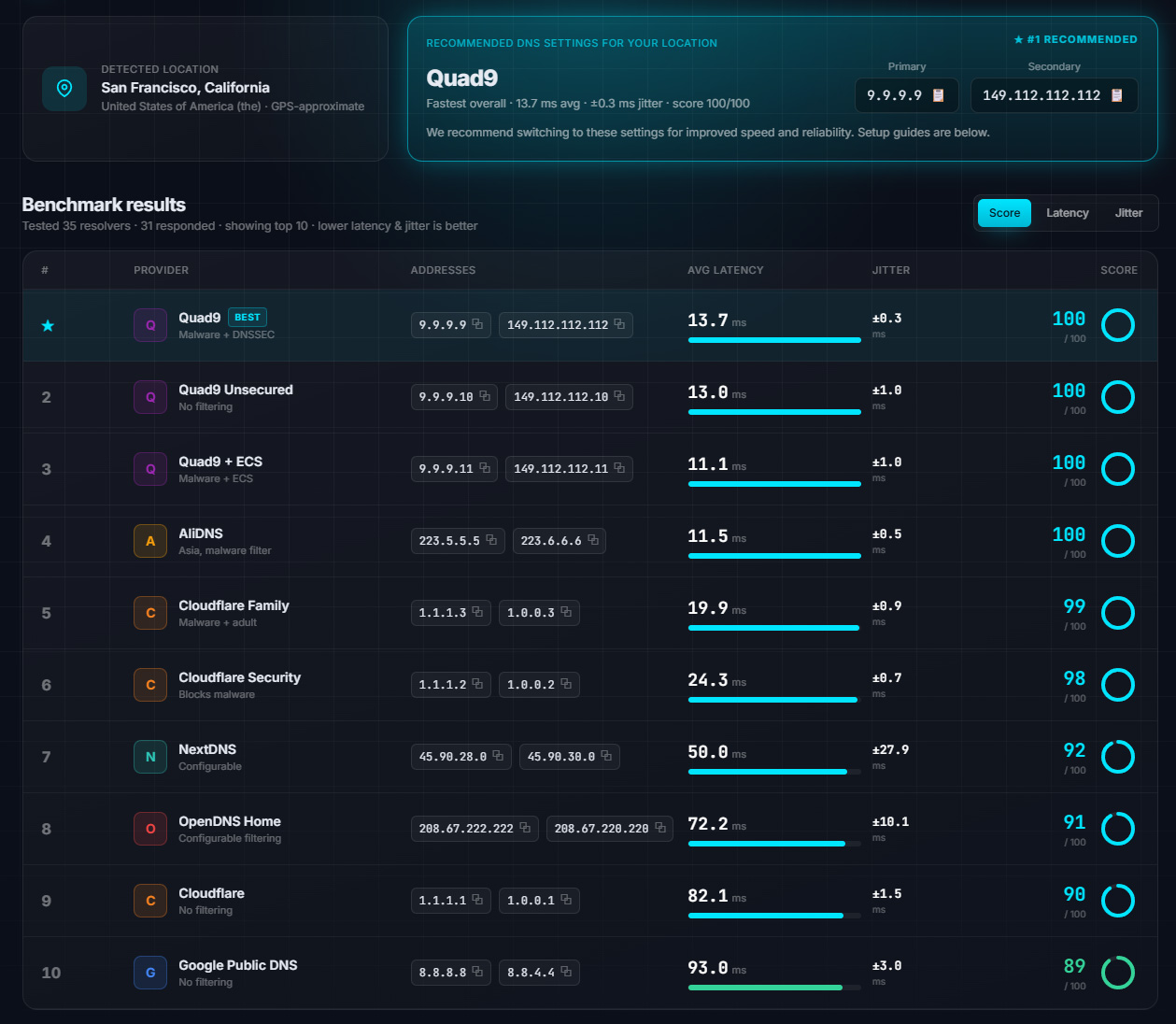
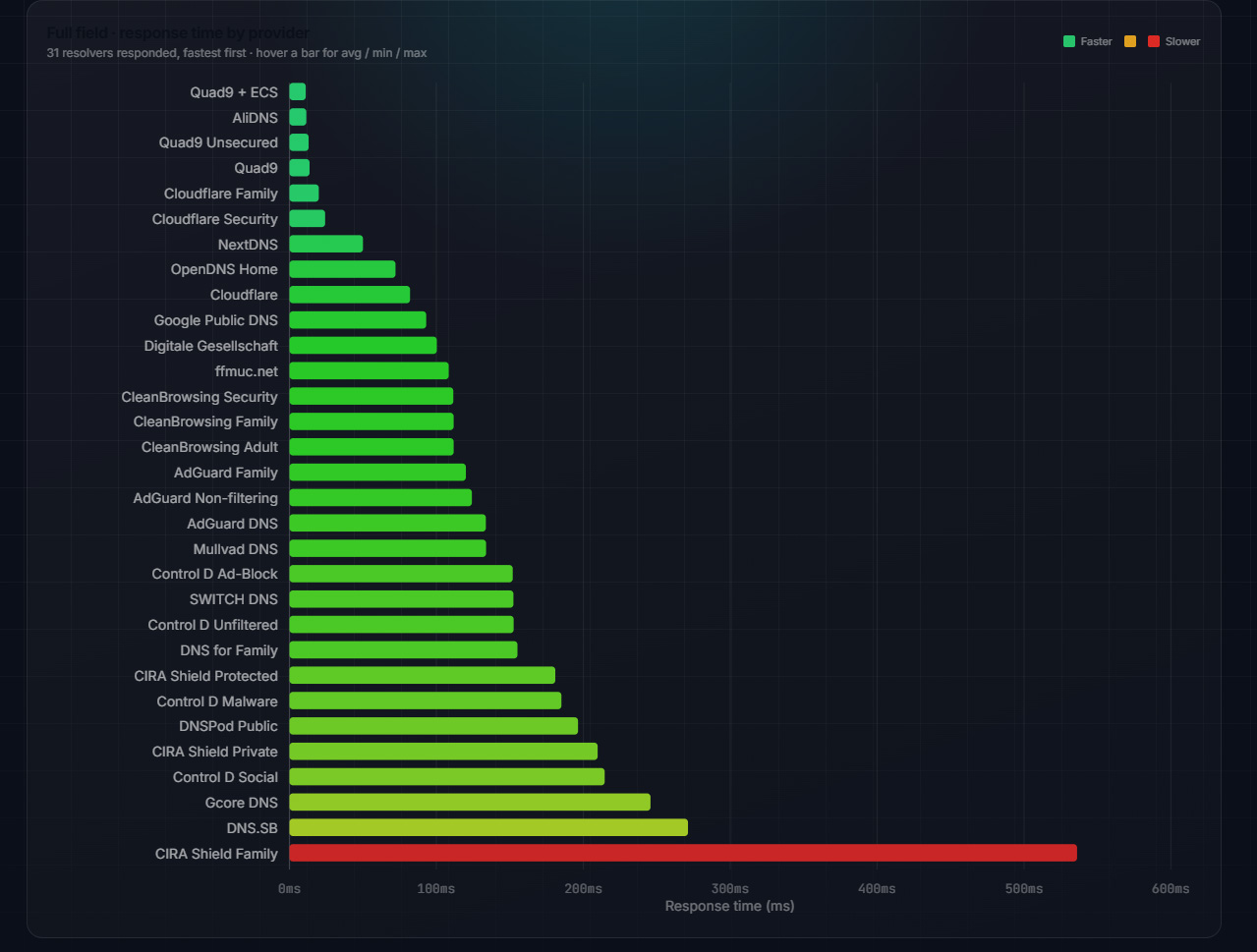
This is why IT security teams should treat a suspected Manager compromise as a fleet-wide integrity question. After patching, diff the current centralized and localized policies against a known-good export, and verify which resolvers your branches actually use. A quick run of a free DNS benchmark and network diagnostic tool from a branch laptop will show whether queries are landing on the resolvers you expect, and whether network latency has shifted in ways that point to a redirect.

Hunting for compromise: logs and indicators
Cisco has published concrete hunting guidance. Two log files matter:
/var/log/nms/containers/service-proxy/serviceproxy-access.log— look for requests toj_security_checkin which any character is percent-encoded, such asPOST /%6a_security_check, from unfamiliar source addresses./var/log/nms/vmanage-server.log— look forj_security_checkactivity tied toviptela-reserved-system accounts from IPs you do not recognise.
If either shows a hit, Cisco asks customers to open a Severity 3 TAC case and supply request admin-tech output for review. Because the attacker had admin API access, assume configuration, device certificates and stored credentials were readable, and plan rotation accordingly.
Hardening the SD-WAN management plane
- Patch first. With no workaround, the fixed release is the only real remediation.
- Take the controller off the internet. Cisco advises restricting HTTPS access to authorized jump hosts or a management subnet and not exposing ports 443, 22 or 830 directly.
- Firewall the control components. Manager, Controller and Validator should accept connections only from known overlay and administrator addresses.
- Audit accounts and policy. Look for new admin users, API tokens and policy templates created since early September.
- Verify edge DNS. Confirm every site resolves through approved resolvers, ideally over encrypted transport — our guide to DNS over HTTPS and DoT explains the trade-offs.
Industry impact
The pattern of 2026 cybersecurity news is now hard to ignore. NetScaler, BIG-IP, Firepower Management Center and now Catalyst SD-WAN Manager: the most exploited zero-day vulnerability class this year is not in endpoints but in the management planes of network and server infrastructure. These boxes are trusted by design, monitored lightly, and too often reachable from the internet because someone needed remote access once.
For tech infrastructure owners the lesson is architectural as much as operational. Controllers that can rewrite routing, segmentation and DNS for an entire enterprise deserve the same isolation as a domain controller or a cloud root account. Patch CVE-2026-76504 today, hunt through the logs back to the start of September, and then make sure the next SD-WAN advisory finds your management plane somewhere an attacker cannot reach. Readers who followed our coverage of the Cisco FMC authentication bypass will recognise the theme: in modern tech infrastructure, the control plane is the crown jewel.
Sources
- The Hacker News — Cisco warns of attackers exploiting critical authentication bypass in SD-WAN Manager
- BleepingComputer — Cisco warns of new SD-WAN authentication bypass zero-day exploited in attacks
- HOL — Cisco SD-WAN Manager admin API bypass hits CISA KEV
- CISA — CISA adds one Known Exploited Vulnerability to catalog (30 September 2026)
- SecurityWeek — Background on earlier 2026 Cisco SD-WAN zero-days
Independent editorial analysis published by DNS Benchmark Pro / Genext Information Systems. The Cisco headquarters photograph is by Travis Wise, licensed CC BY 2.0 via Wikimedia Commons; the Cisco logo is the company's official mark, public domain, via Wikimedia Commons; the benchmark screenshots are original captures of the DNS Benchmark Pro engine. No images on this page are AI-generated.