Network Outage
Network Outage: Kiteworks Orders 6-Hour Shutdown
Published September 26, 2026 · DNS Benchmark Pro Editorial · Reading time: 6 minutes
TL;DR — On Friday 25 September 2026 secure file-transfer vendor Kiteworks — the company formerly known as Accellion — told customers to power their servers off. The notification cited credible threat intelligence from law enforcement that an attack on Kiteworks systems might be imminent over the weekend, and recommended a roughly six-hour shutdown window on Saturday 26 September, about 02:00–08:00 UTC. No CVE has been published, no compromise has been confirmed, and Kiteworks describes the advisory as preventative. Customers are told to run release 9.5.1. More than 1,000 Kiteworks systems are reachable from the public internet.
A network outage is normally something an operations team explains after the fact. This weekend, more than a thousand enterprises scheduled one deliberately, on a vendor's advice, against a threat nobody has publicly described. That makes the Kiteworks advisory the most interesting enterprise IT news of the week — not because of what is known about the underlying zero-day vulnerability, but because of how little is, and what defenders were asked to do anyway.
What Kiteworks told customers
Kiteworks builds the platform enterprises use to move regulated files — patient records, legal discovery, engineering drawings, financial filings — between organisations. It is sold as an appliance or private cloud instance that the customer operates, which is exactly why the vendor could not simply fix the problem centrally and move on.
According to reporting by BleepingComputer, the notification came from the company's chief information security officer, Frank Balonis, and said law enforcement had supplied credible intelligence that a threat actor might target some customer systems that weekend. Kiteworks was explicit that it was not aware of any compromise and that the advisory was preventative rather than a response to a confirmed breach. Customers were pointed at release 9.5.1, which the company says addresses all known flaws — wording that quietly concedes the concern is an unknown one.
| Region | Recommended shutdown window |
|---|---|
| UTC | Sat 26 Sep, approx. 02:00 – 08:00 |
| Central Europe (CEST) | Sat 26 Sep, 04:00 – 10:00 |
| New York (EDT) | Fri 25 Sep 22:00 – Sat 26 Sep 04:00 |
| Coverage | Guidance issued from AEST through to PDT |
A planned network outage as a security control
Powering equipment off is the oldest mitigation there is, and it is almost never the right one. It converts an uncertain security risk into a certain availability cost, and in most enterprises that trade is refused. The fact that Kiteworks recommended it anyway, globally, on a few hours' notice, tells you how the vendor rated the intelligence.
It is worth separating this from the outages operations teams actually drill for. A DDoS attack, a bad BGP announcement or a cloud security incident at a provider produces downtime you did not choose and cannot schedule. A pre-emptive shutdown is the opposite: you spend availability on purpose, at a time you pick, to close a window you cannot otherwise defend.
It is also a reasonable read of the threat model. Managed file transfer platforms are not attacked slowly. The pattern established over the last five years is a pre-authentication flaw, a scripted sweep of every internet-facing instance, and bulk data theft inside a single weekend — the extortion demands arrive weeks later. Against a campaign shaped like that, a six-hour network outage timed to the quietest hours of a Saturday is not theatre. It removes the target during the window the attacker most likely chose.
Jake Knott of watchTowr summarised the situation for Cybernews as "not only unusual but never a good sign", and noted that flaws in this class of product rarely stay secret. The counter-argument is that publicity pushes an operator back underground, buying the vendor time to ship a fix.
Why managed file transfer keeps producing this cybersecurity news
Kiteworks was Accellion until 2021, and Accellion is the reason this advisory reads the way it does. That December, the Cl0p extortion crew chained zero-days in the legacy File Transfer Appliance and stole data from hundreds of organisations worldwide. It became the template.
| Year | Platform | Mechanism |
|---|---|---|
| 2021 | Accellion FTA | Chained zero-days in a legacy appliance; mass data theft |
| 2023 | Fortra GoAnywhere MFT | CVE-2023-0669, pre-auth deserialisation to remote code execution |
| 2023 | Progress MOVEit Transfer | CVE-2023-34362, SQL injection to web shell; thousands of victims |
| 2026 | Kiteworks | Unspecified; pre-emptive shutdown advisory, no CVE published |
The common factor is architectural rather than accidental. An MFT server is internet-facing by design, authenticates external parties by design, and holds a concentrated archive of exactly the material worth stealing. Every property that makes it useful also makes it a high-value target, which is why IT security teams should treat these systems as a distinct tier of server infrastructure with their own monitoring, their own isolation and their own shutdown runbook. The same reasoning applies to the hosted versions: a cloud security boundary does not remove the concentration of sensitive data, it just moves who is holding it during the next network outage.
What a controlled shutdown actually breaks
Taking an appliance offline is simple. Doing it without generating a support queue is not, and most of the failure modes are name-resolution and edge-configuration problems rather than storage ones.
Automated partner integrations retry on a schedule and will hammer a dead listener until something backs off. Health checks in front of a load balancer may fail a node out permanently rather than temporarily. And if the hostname is steered by DNS, the record's TTL decides how long your maintenance page takes to appear and, more importantly, how long the old answer lingers after you bring the service back — a cached A record with a 3,600-second TTL will keep resolvers pointed at a maintenance host well past the end of the window. Anyone planning this kind of outage should drop the relevant TTLs hours in advance, not at the start of the window.
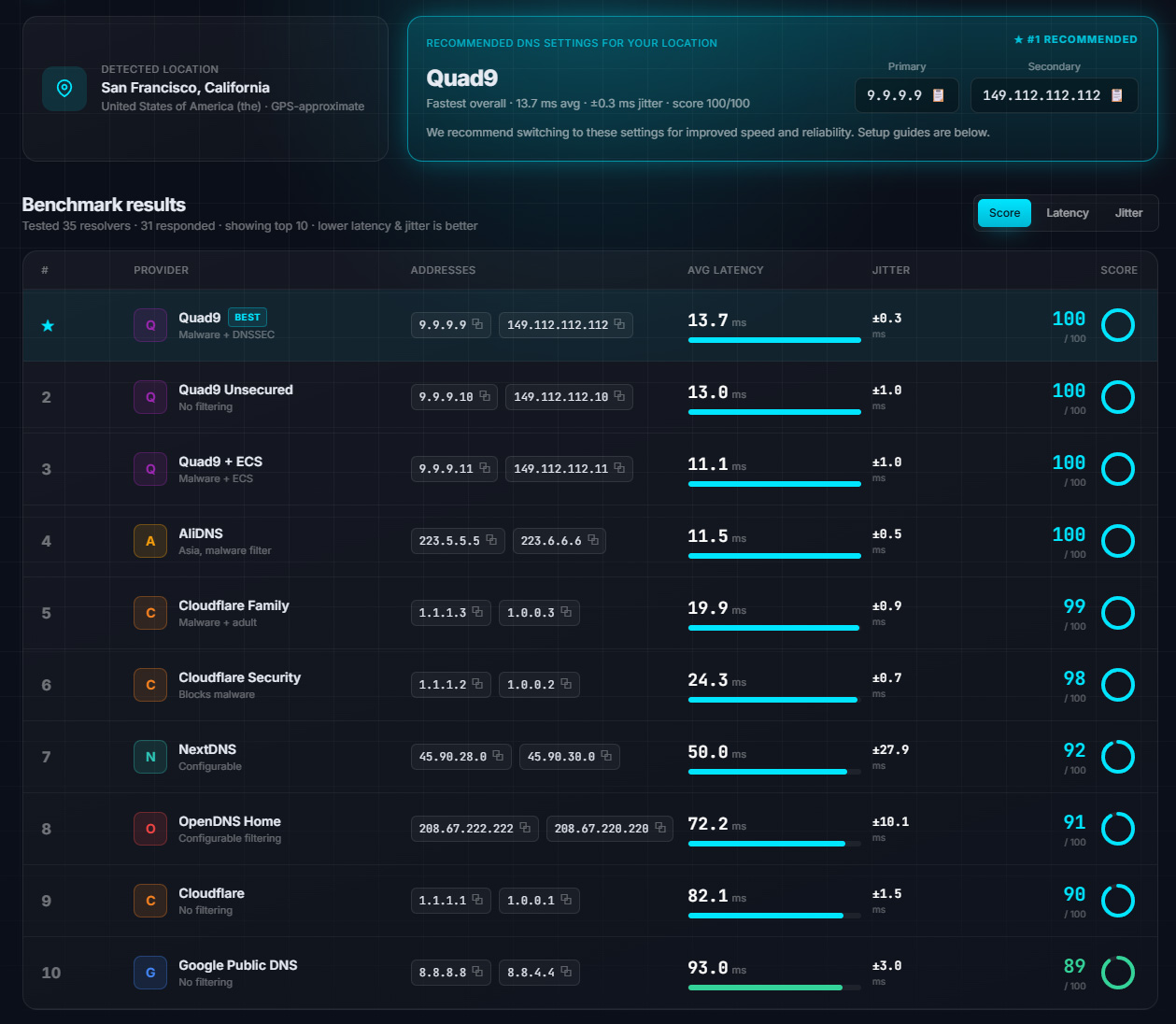
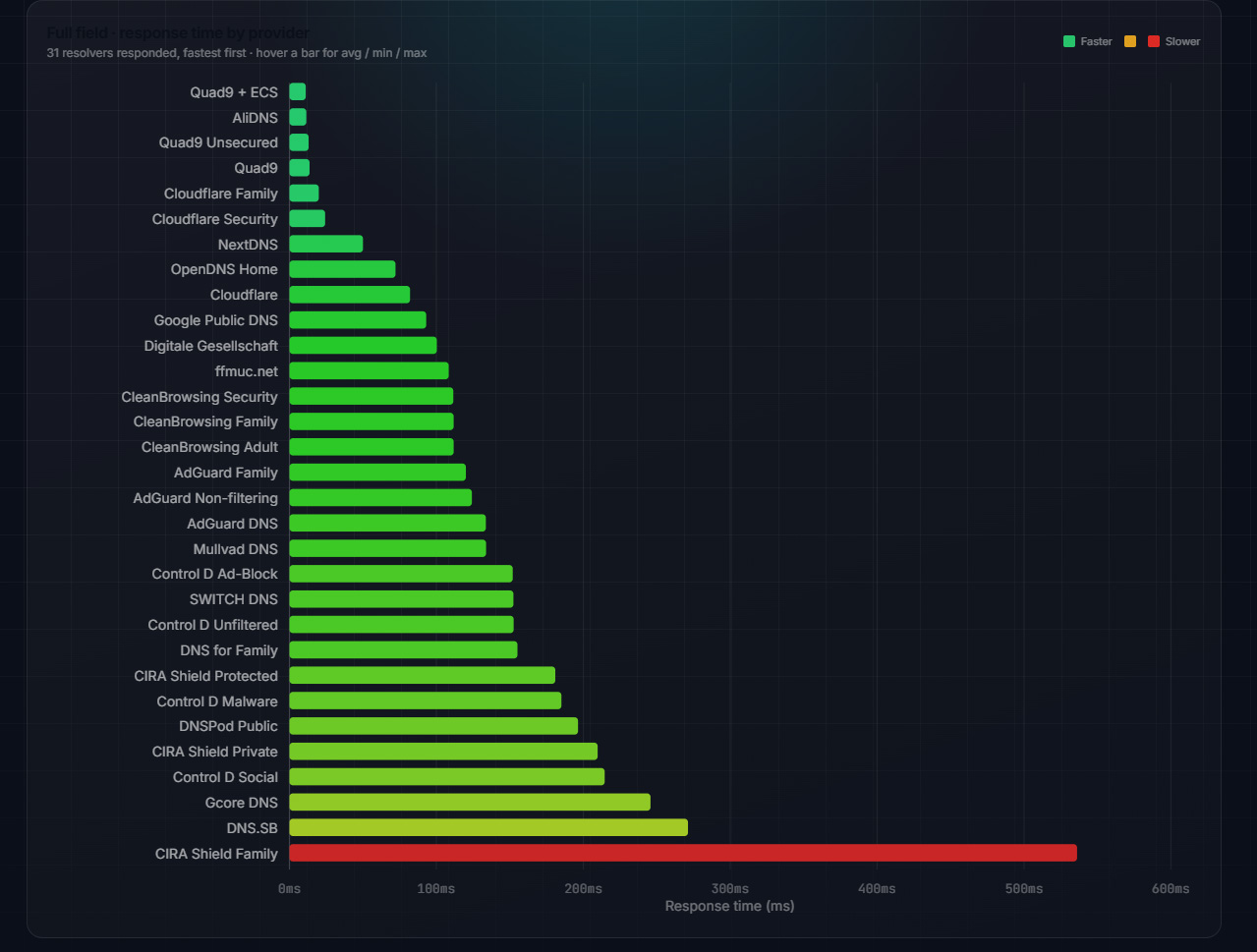
Encrypted transports add a wrinkle. Where clients reach the service through DNS over HTTPS or DoT resolvers they do not control, and where split-horizon views serve different answers internally and externally, verifying that a change has actually propagated means measuring it rather than assuming it. Our explainer on DNS over HTTPS covers where that latency and caching behaviour comes from, and a free network diagnostic tool that measures real DNS resolution latency gives you a per-resolver view from your own vantage point. Comparing DNS server performance before and after a maintenance window is the cheapest way to prove propagation worked.
The IT security checklist for this weekend
- Confirm the advisory with your account team. Act on the vendor's own channel, not on a forwarded screenshot. Shutdown instructions are an obvious phishing pretext.
- Get to 9.5.1 before you power back on, and treat the restart as the risky moment rather than the shutdown.
- Preserve logs first. Export web, authentication and admin-action logs off the appliance before the outage; retrospective hunting is impossible without them.
- Shrink the exposure permanently. If the service does not need to answer the whole internet, put it behind a VPN or an allow-list. More than 1,000 instances are currently reachable by anyone who scans for them.
- Lower DNS TTLs in advance and confirm failover records resolve correctly from outside your network. Verify network latency and resolution paths once service is restored.
- Hunt on restart. Look for new admin accounts, unexpected outbound connections, and file-access volumes that do not match a normal Monday.
Industry impact
Two precedents matter here. The first is positive: a vendor acting on law-enforcement intelligence before an incident, and telling customers plainly, is better than the alternative the industry usually gets, which is a breach notification in November about an intrusion in September. Neither the FBI nor CISA commented publicly on the alert, so the underlying intelligence remains unverifiable from the outside — but the direction of travel is right.
The second is harder. "Turn it off" does not scale as guidance. It works for a six-hour window on a weekend and for a product whose users tolerate downtime. Repeat it during a business day, or for a resolver, an identity provider or a payment gateway, and the recommendation is unusable. The durable lesson is the one that applies before the phone rings: the fewer systems that must stay internet-facing, the fewer of these decisions you ever have to make. Every enterprise running an MFT platform should be asking this week whether theirs needs to be reachable from the open internet at all, and whether anyone would notice if it went dark for six hours — because on current evidence, that question gets asked for you, at short notice, by someone else.
Sources
- BleepingComputer — Kiteworks urges 6-hour server shutdown over potential zero-day attacks
- TechCrunch — Kiteworks urges customers to shut down their servers amid 'imminent' threat of cyberattack
- Cybernews — Kiteworks zero-day warning: customers urged to shut down systems
- Computer Weekly — Expecting cyber attack, Kiteworks tells users to turn off servers
- Sophos — Kiteworks recommends server shutdown pending possible attack
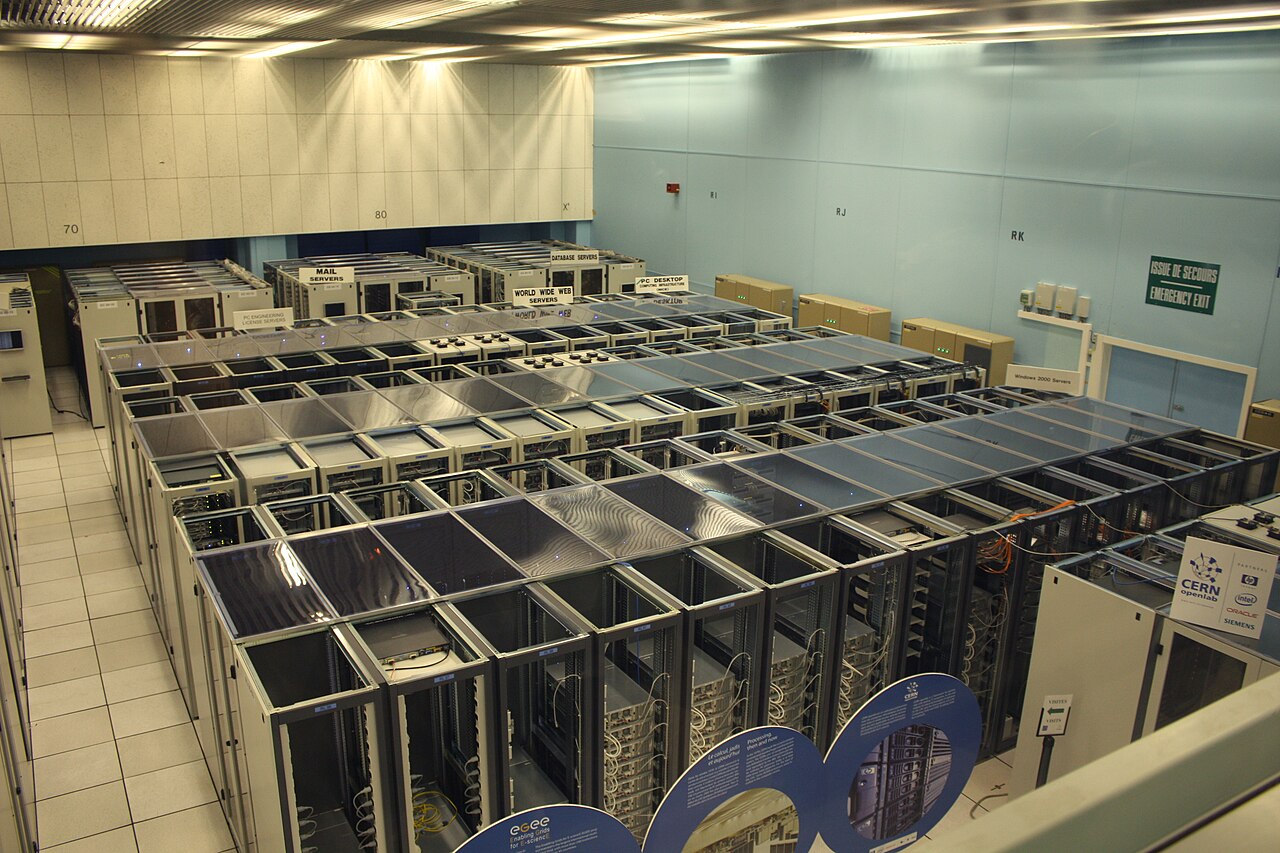
Independent editorial analysis published by DNS Benchmark Pro / Genext Information Systems. The data center photograph is by Wikimedia Commons contributor Hugovanmeijeren, licensed CC BY-SA 3.0, and is illustrative rather than a Kiteworks facility; the Kiteworks wordmark is the company's official logo, public domain; the benchmark screenshots are original captures of the DNS Benchmark Pro engine. No images on this page are AI-generated.